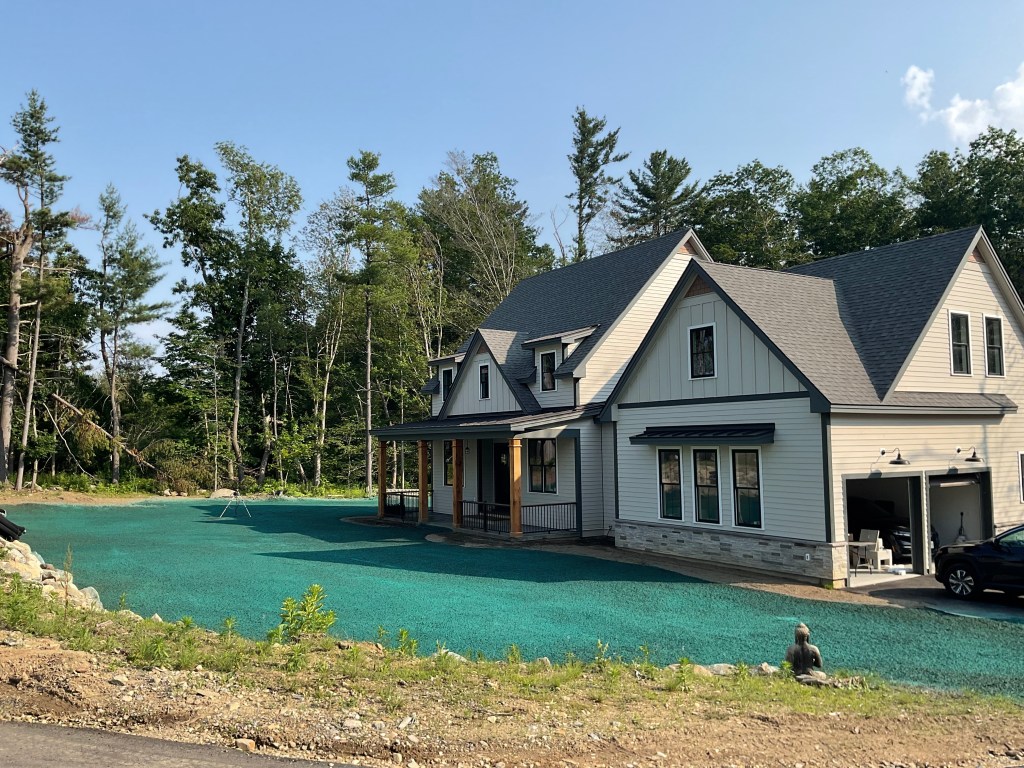
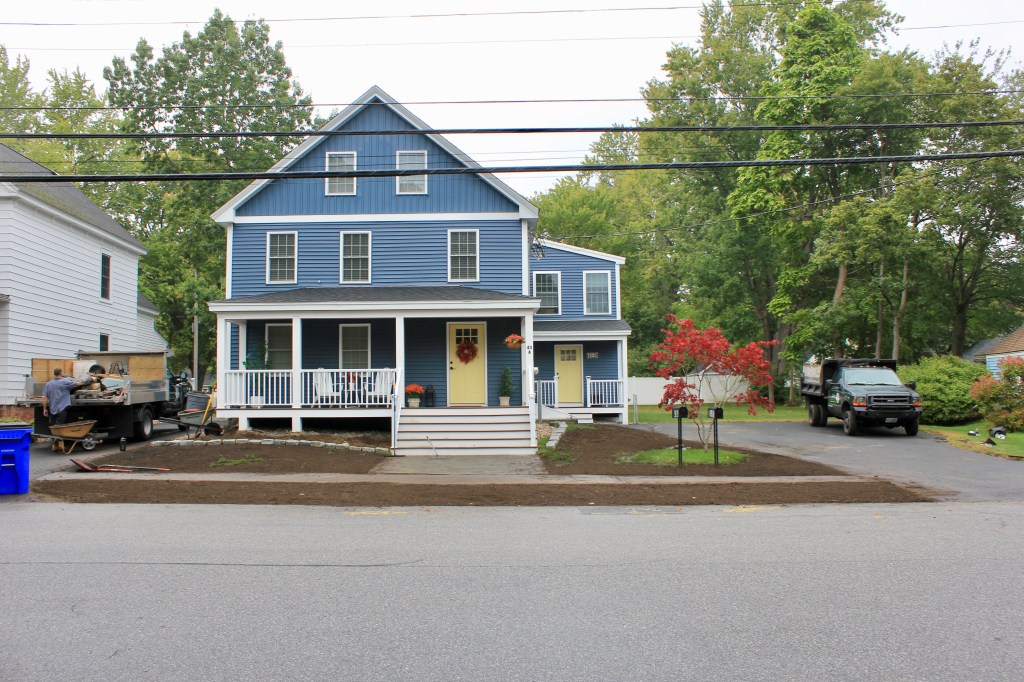
This project began after the previous contractor abandoned the site, leaving the property in an unfinished and unstable condition. Large piles of debris, unmanaged materials, and overgrown areas created both safety and long-term landscape concerns.
Our first priority was assessing what had been left behind and determining how to correct it properly.
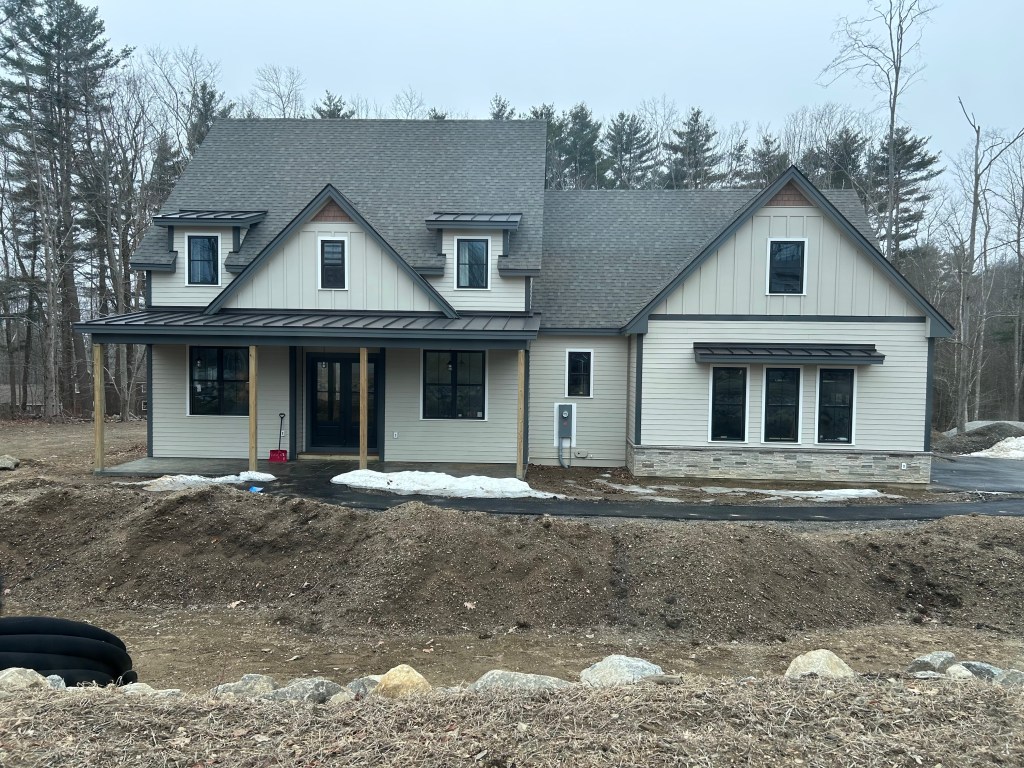
As we began excavation, we uncovered extensive buried debris, including oversized logs and organic material that posed a serious risk of future sinkholes. Rocks and unsuitable fill had also been pushed into the soil without regard for grading or compaction. Years of neglect and improper filling had left the site unstable, creating uneven surfaces that made planting nearly impossible.
The existing soil quality was extremely poor and unsuitable for supporting a healthy lawn, requiring a complete rebuild with fresh, nutrient-rich compost and careful grading to ensure long-term stability and growth.
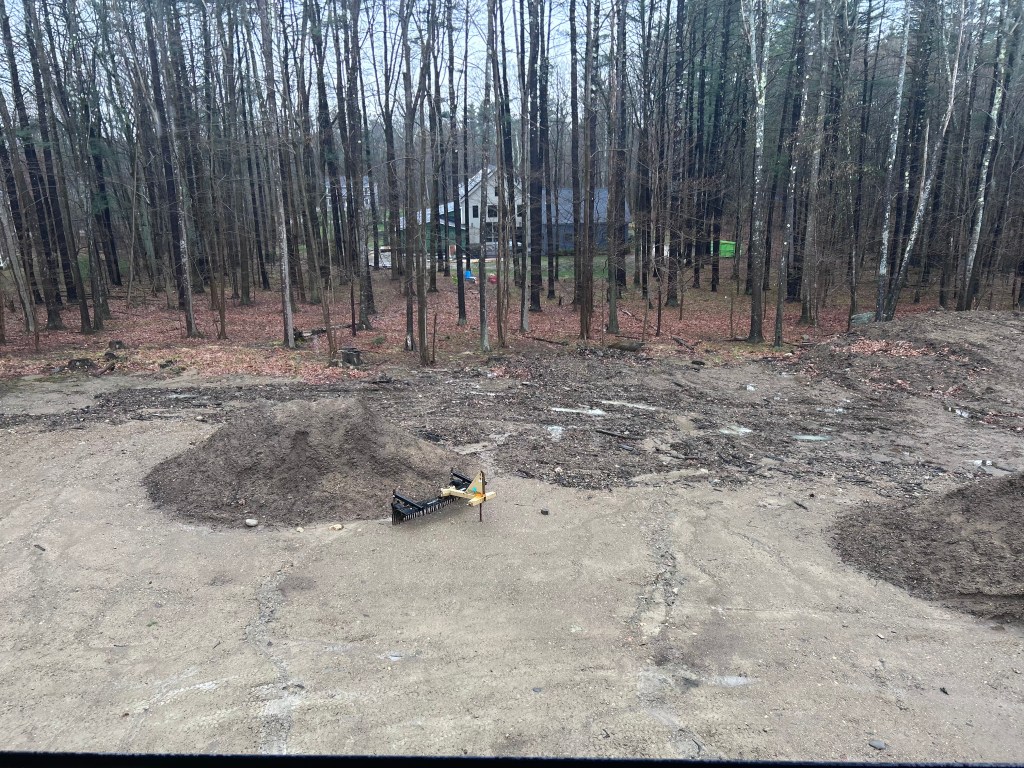
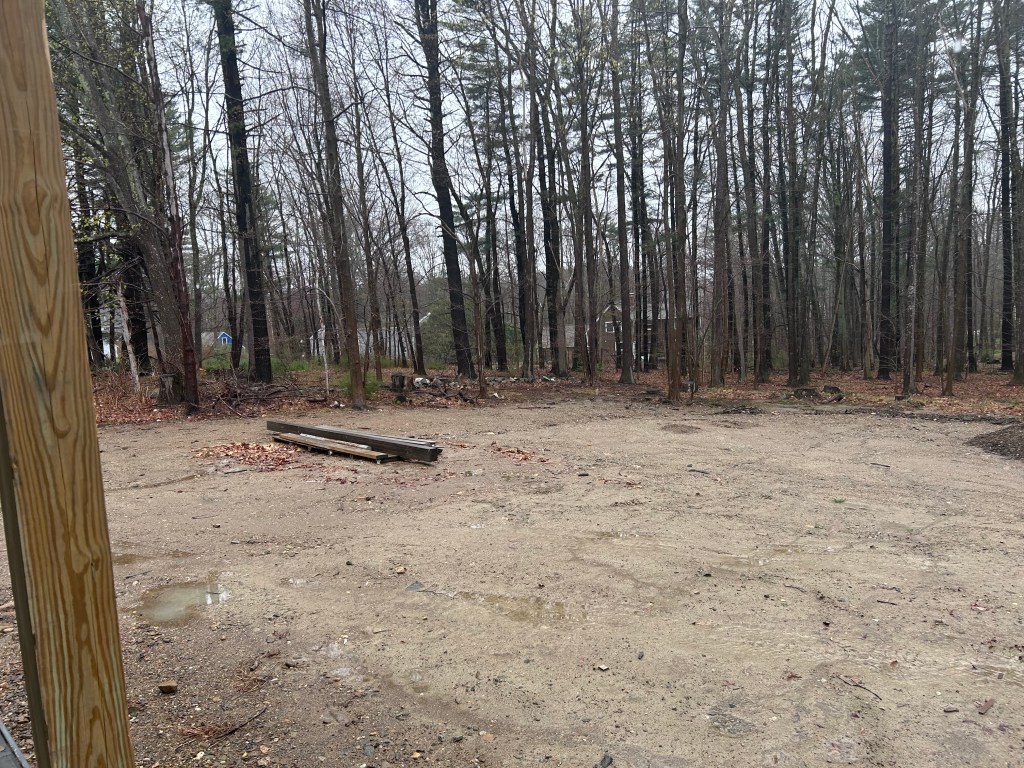
To correct these issues, all improper materials had to be fully removed rather than buried or leveled over. This process resulted in two large debris piles totaling six full truckloads hauled off-site. Every piece of buried debris posed a potential hazard, from creating low spots to interfering with root growth, so careful, methodical excavation was essential. The work required patience, precision, and close attention to grading to make sure the site would remain stable for years to come. Removing this material was critical not only to prevent settling or drainage failures but also to establish a clean, nutrient-rich foundation where new soil, compost, and plantings could thrive.
By addressing these hidden obstacles, we ensured the garden could flourish safely and beautifully well into the future.
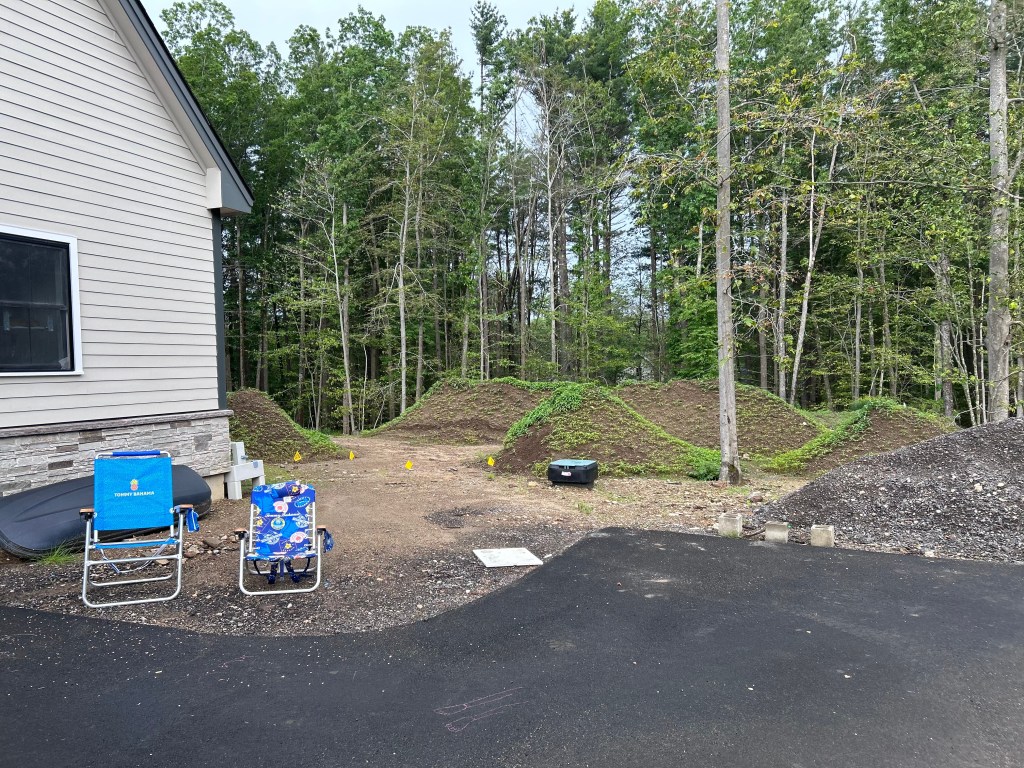
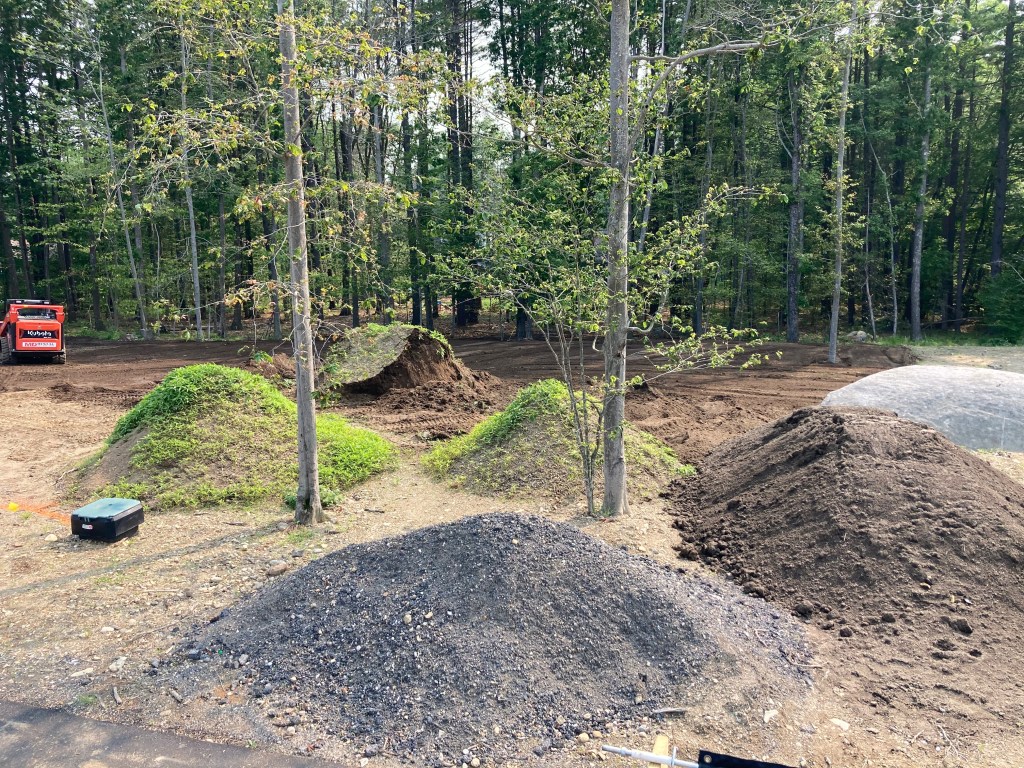
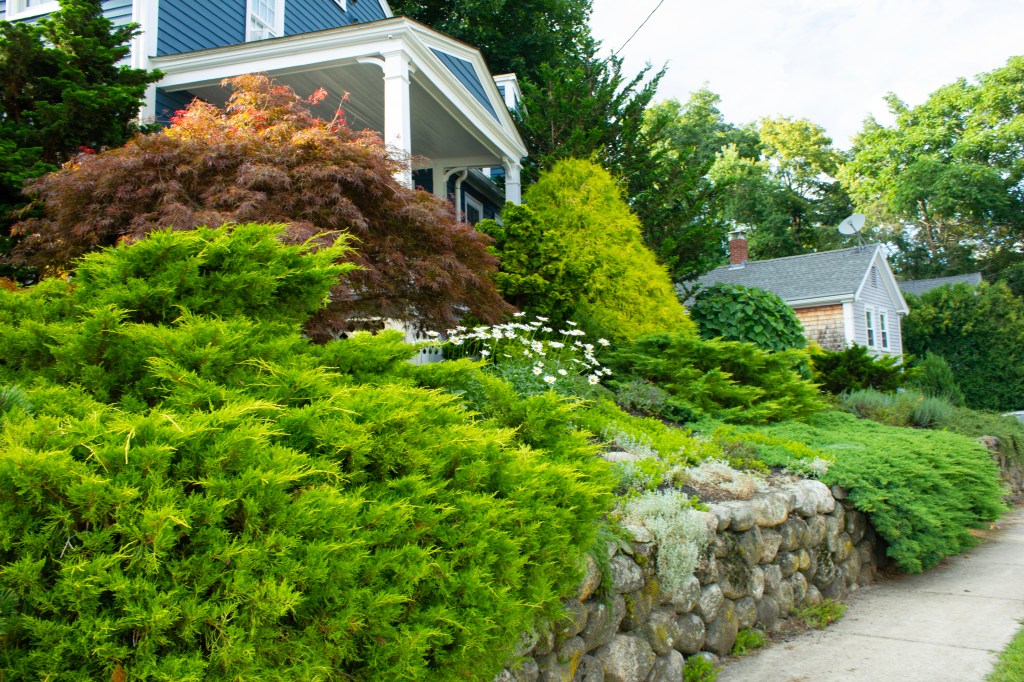
With the site cleared, we focused on grading and drainage—one of the most important phases of the project. The home sits below a retaining wall on a hillside, requiring careful shaping to direct water away from the foundation and prevent erosion. Subtle slopes were created to manage runoff while preserving a natural, seamless look that blends with the landscape. Every contour was carefully planned, balancing function with aesthetics, so water would flow efficiently without disrupting the overall design.
This step ensured long-term stability, protected the property, and set a solid groundwork for the rest of the installation, allowing plantings and hardscape features to thrive for years to come.
Once grading was complete, we began rebuilding the soil profile from the ground up. Over 300 yards of fresh, compost-rich loam were brought in and carefully spread across the site to create a deep, fertile foundation for the new lawn. On a 50,000-square-foot area, this was a major logistical and labor-intensive phase, requiring precise coordination of deliveries, machinery, and crews to ensure even coverage. Every layer was carefully smoothed and tested for consistency, providing the ideal environment for grass and plant roots to establish strong, healthy growth.
This meticulous approach transformed what had been poor, compacted soil into a resilient, nutrient-rich canvas ready for the next phase of landscaping.
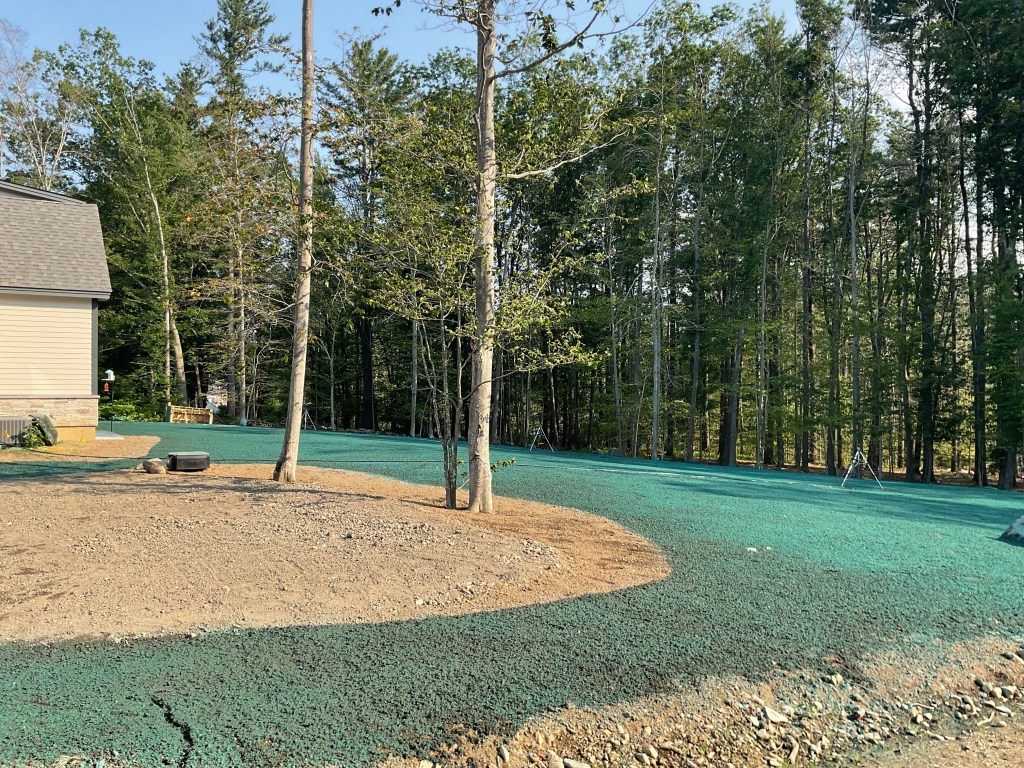
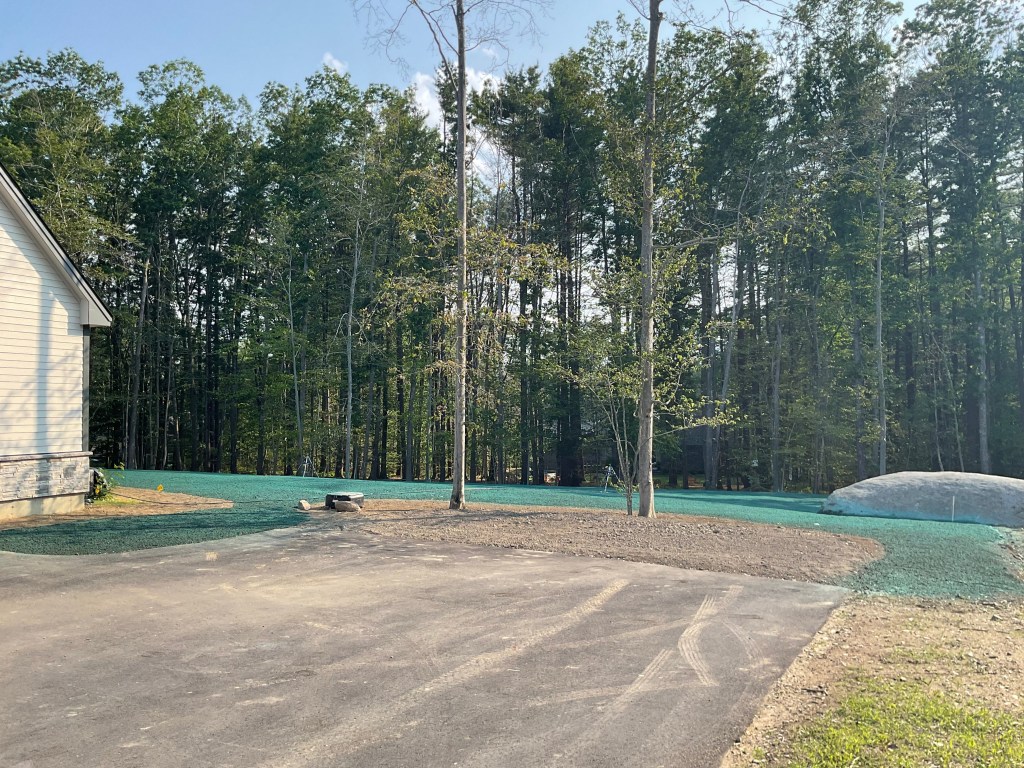
After final soil preparation, the property was hydroseeded with a Maine native grass blend specially selected to encourage pollinators, reduce water demand, and support a healthier overall ecosystem. The seed mix included hardy, region-appropriate species designed to thrive in the local climate while promoting biodiversity. Most importantly, it also provides a durable, low-maintenance lawn well suited to the site’s expansive scale and sun‑exposed conditions.
With careful watering and attention during the establishment phase, the lawn quickly took root, creating a vibrant, sustainable foundation that will continue to flourish for years to come.
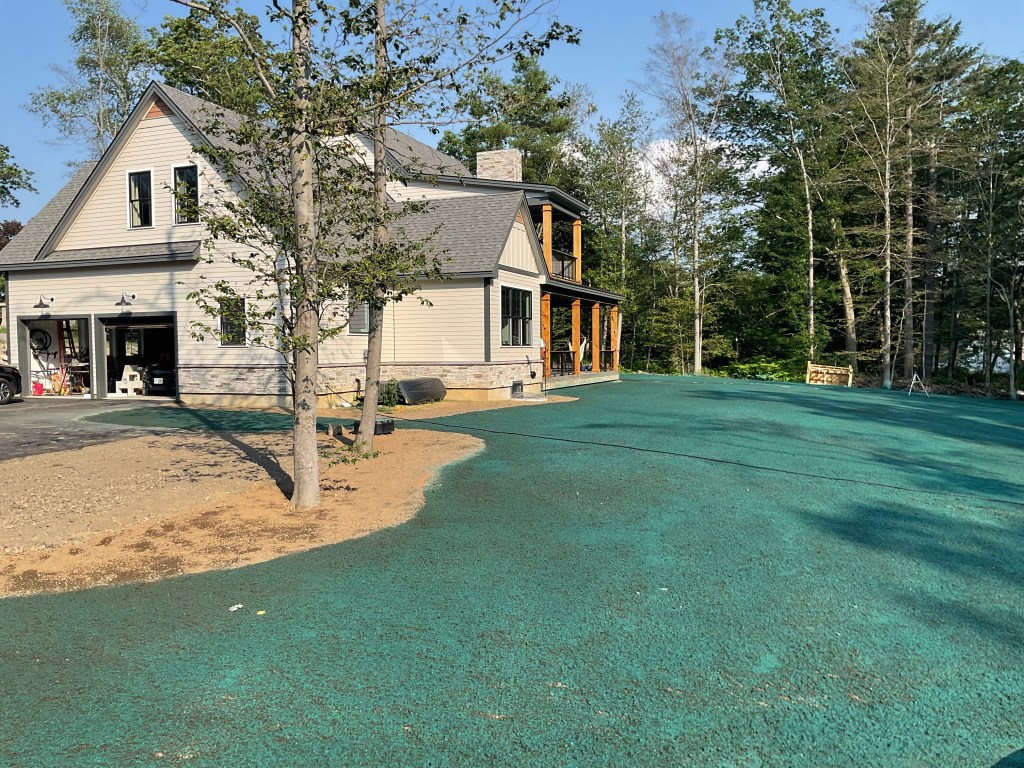
Once the grass was seeded, the site was given time to establish properly, allowing roots to penetrate deeply into the newly prepared soil. This phase is often overlooked but is essential for strong root development, weed suppression, and long-term lawn success. Regular monitoring of early growth, including watering, fertilization, and erosion checks, ensured that every section of the expansive lawn thrived.
By carefully overseeing this critical stage, we confirmed that the significant investment in soil preparation and grading would yield a healthy, resilient landscape for years to come.
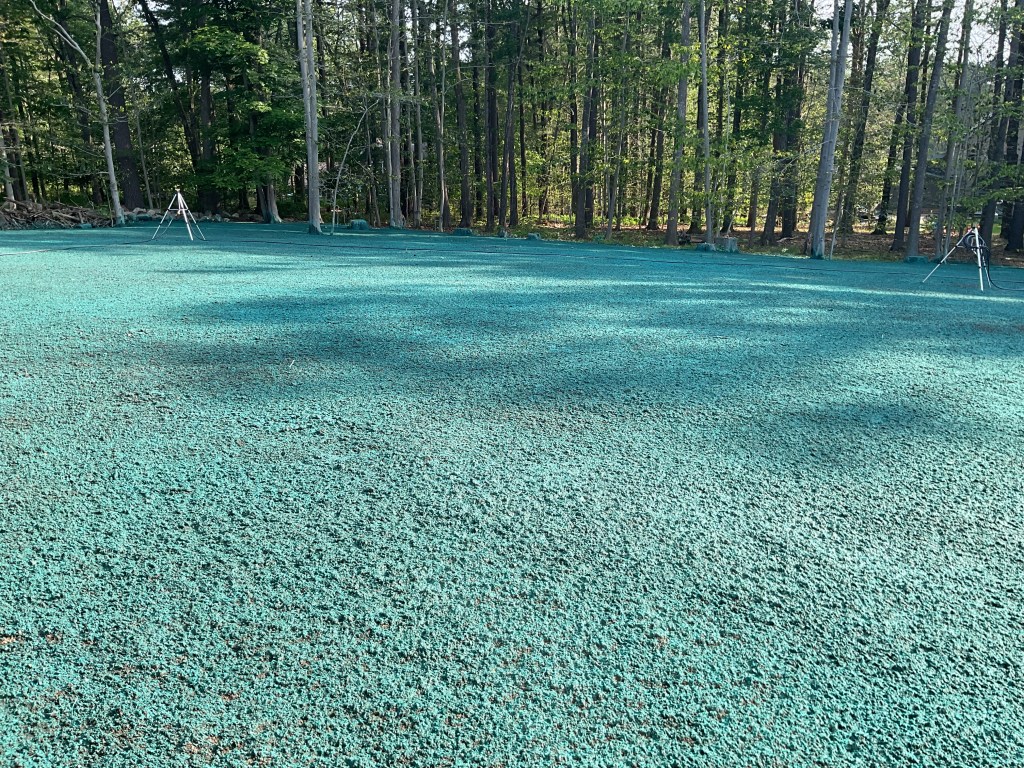
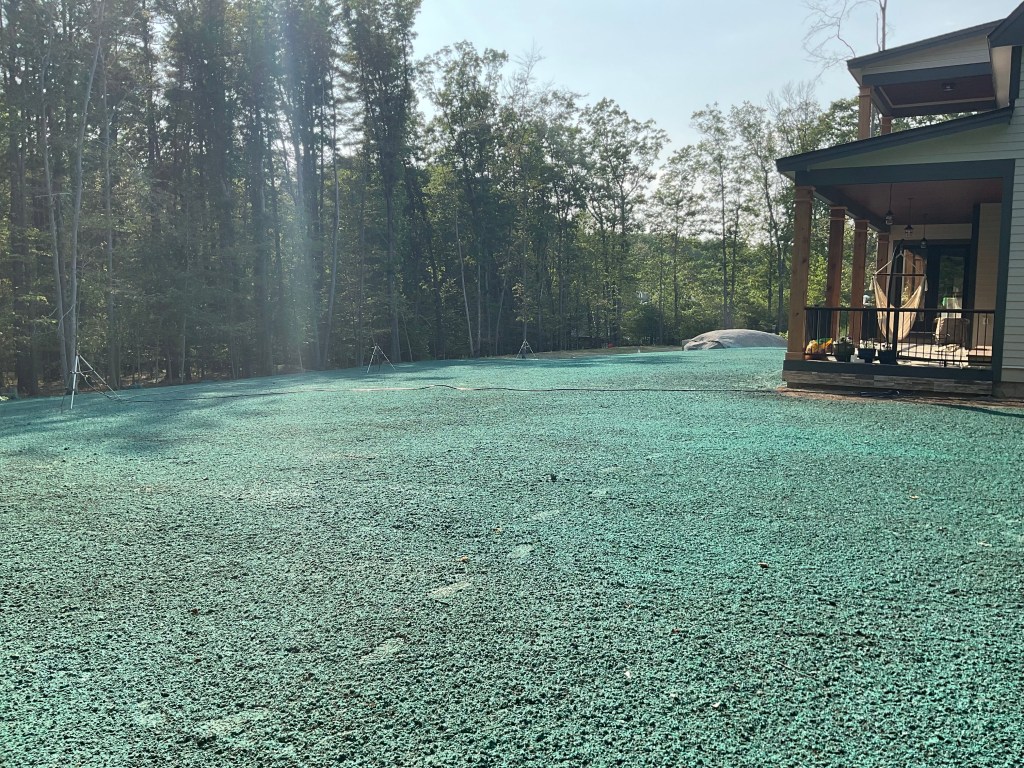
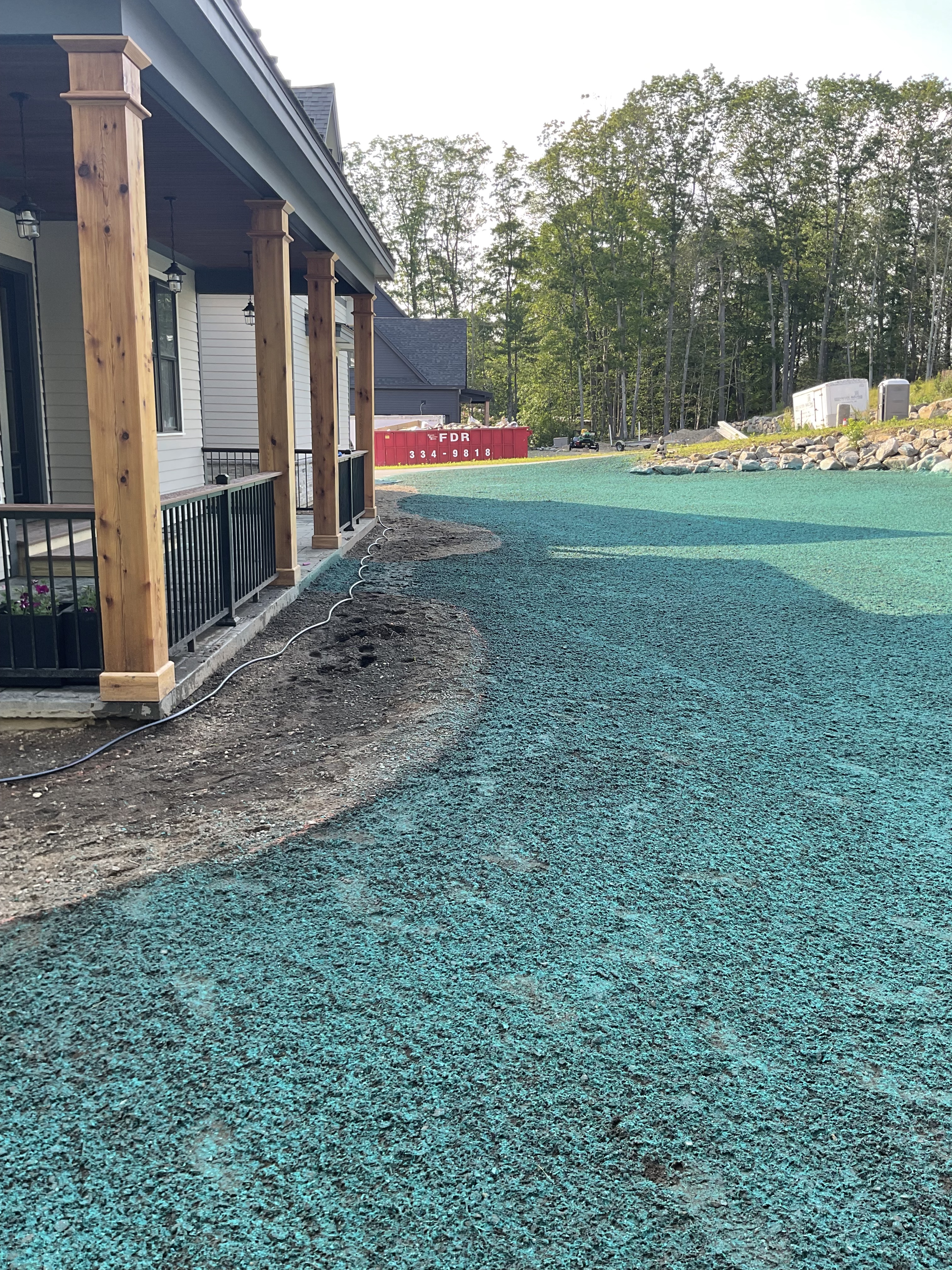
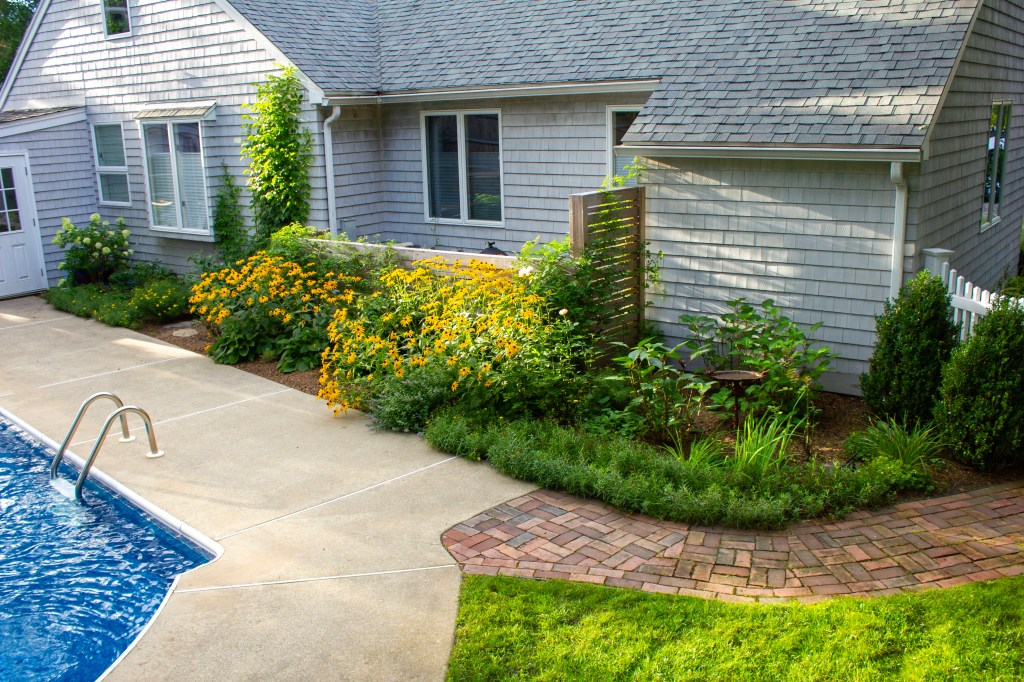
After the lawn filled in, we returned to begin designing and installing the surrounding landscape. With stable soil, proper drainage, and healthy turf firmly established, the property was finally ready for thoughtful planting, hardscape elements, and long-term design planning. Every choice—from plant selection to placement—was made to complement the home, enhance usability, and support sustainability across seasons.
What began as a problematic, debris-filled site was transformed into a functional, ecologically sound, and visually cohesive landscape that will continue to grow and evolve beautifully for years to come.



 JMJ Gardens
Leave a comment