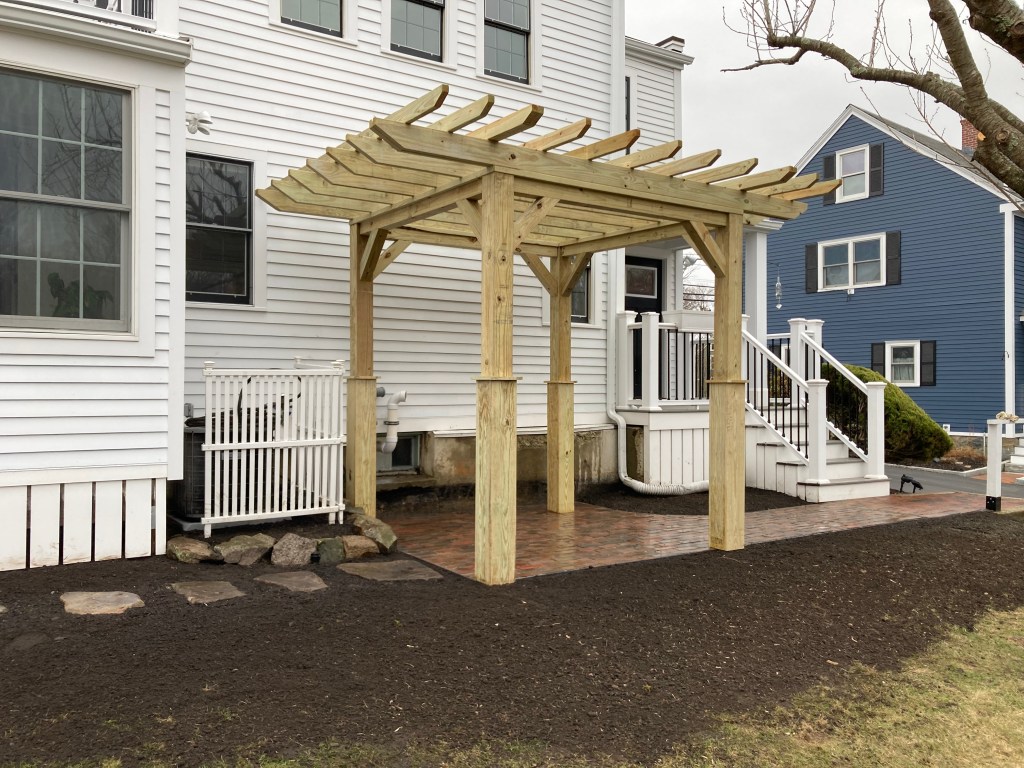
Custom-built structures are at the heart of what we do at JMJ Gardens. Every pergola, raised bed, and garden frame is designed from the ground up — measured, cut, and assembled by hand to fit the property it calls home. We work with carefully selected materials that weather beautifully and hold their integrity through New England’s demanding seasons. No two structures are alike, because no two gardens are alike. It’s this attention to detail and commitment to quality that transforms a simple outdoor space into something that feels intentional, enduring, and completely your own.
When we first visited the property in downtown Newburyport, the backyard was small and unassuming — a blank slate that hadn’t yet found its purpose. The homeowner had recently moved in and wanted the space to feel less like a yard and more like an extension of the home itself. She had a clear vision — a structured, intimate outdoor space with custom built elements that would bring warmth, function, and personality to every corner. The design plan called for thoughtful use of every square foot, layering in woodwork, plantings, and defined areas that would make the space feel complete. The bones were there, and with the right approach, we knew exactly how to bring it to life.
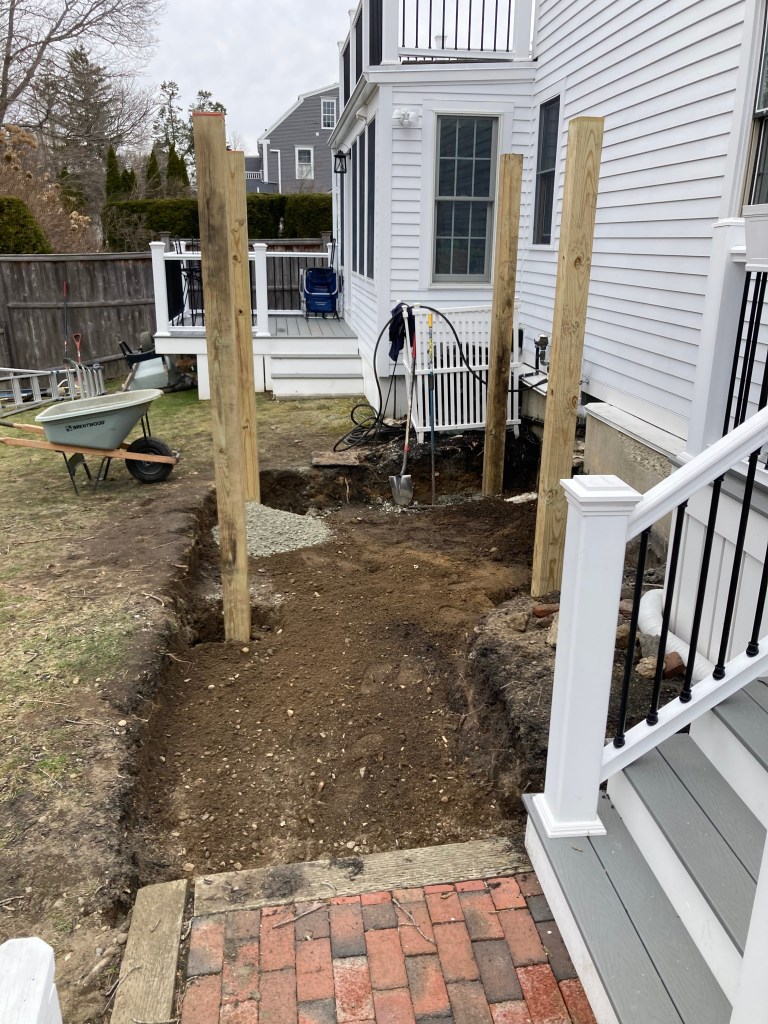
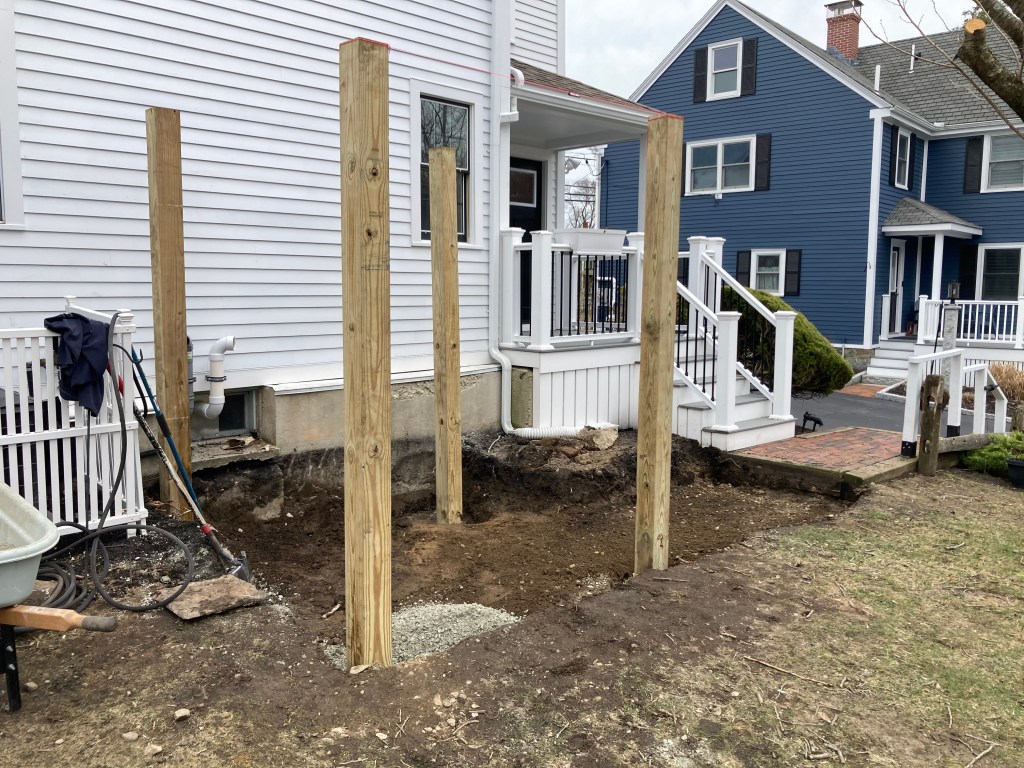
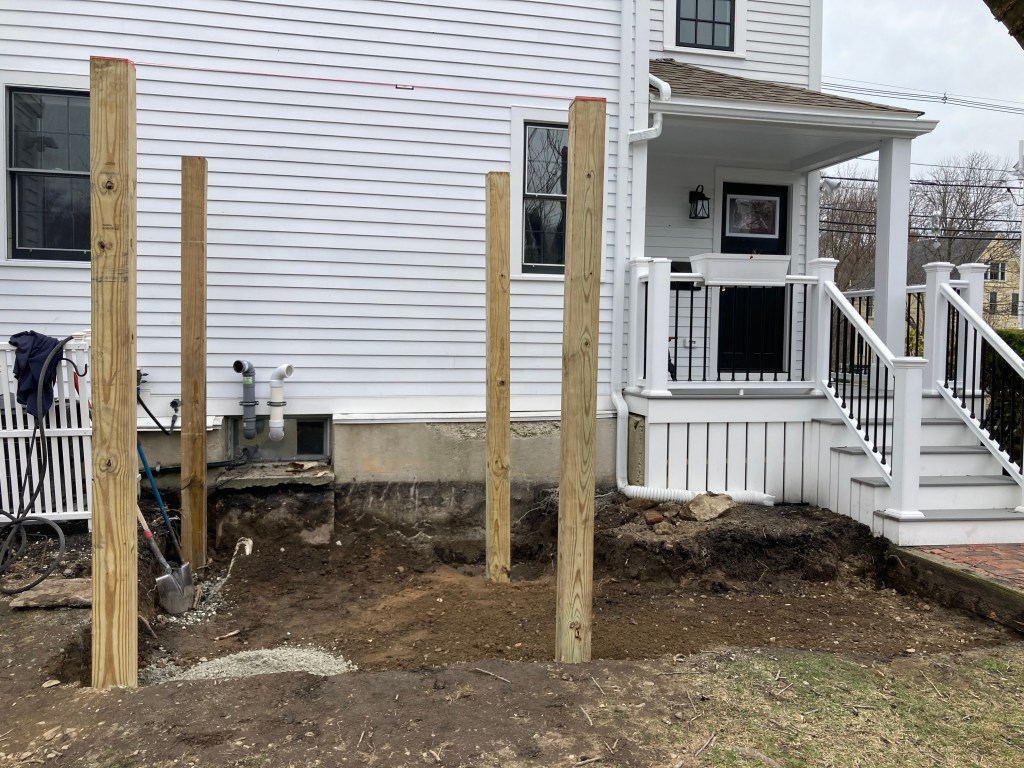
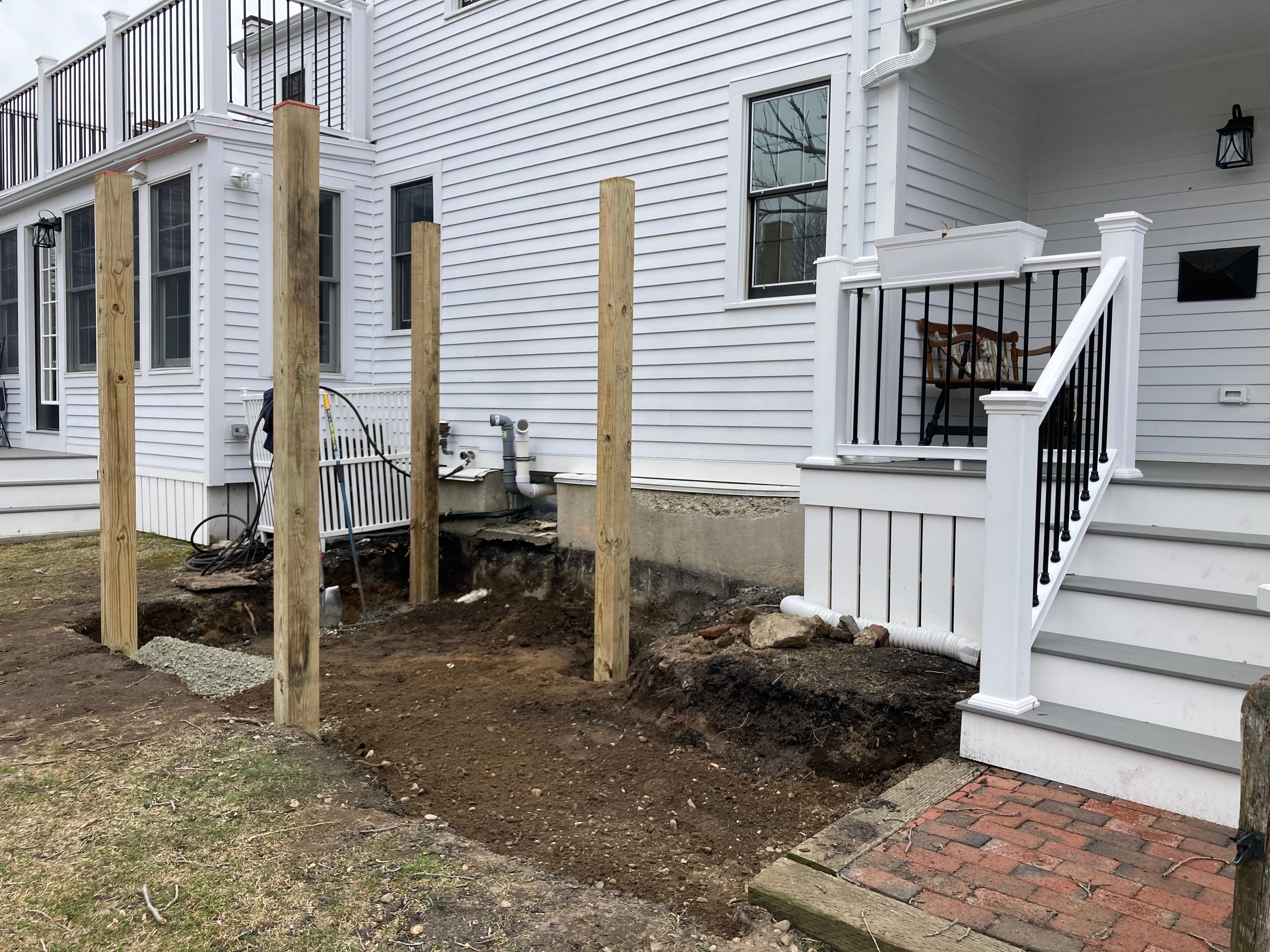
With the design plan set, the real work began beneath the surface. We excavated the entire patio area down twelve inches below grade, hauling out two full truckloads of soil to create a clean, stable foundation ready to be rebuilt the right way. This phase of the project is one that rarely gets seen but makes all the difference — a properly prepared base is what separates a patio that lasts decades from one that shifts and crumbles after a few hard winters. Pergola post holes were dug four feet deep — far enough to anchor the structure against frost heave and the unforgiving conditions New England winters bring year after year.
Each hole was filled with concrete, locking the posts firmly in place before a single board was fastened above. The remaining excavated area was then carefully packed with a three-quarter inch gravel and sand mix, compacted in layers to create a solid, well-draining base that would support the patio surface above. Every step of this process was deliberate, because what lies beneath the finished surface is just as important as what sits on top of it.
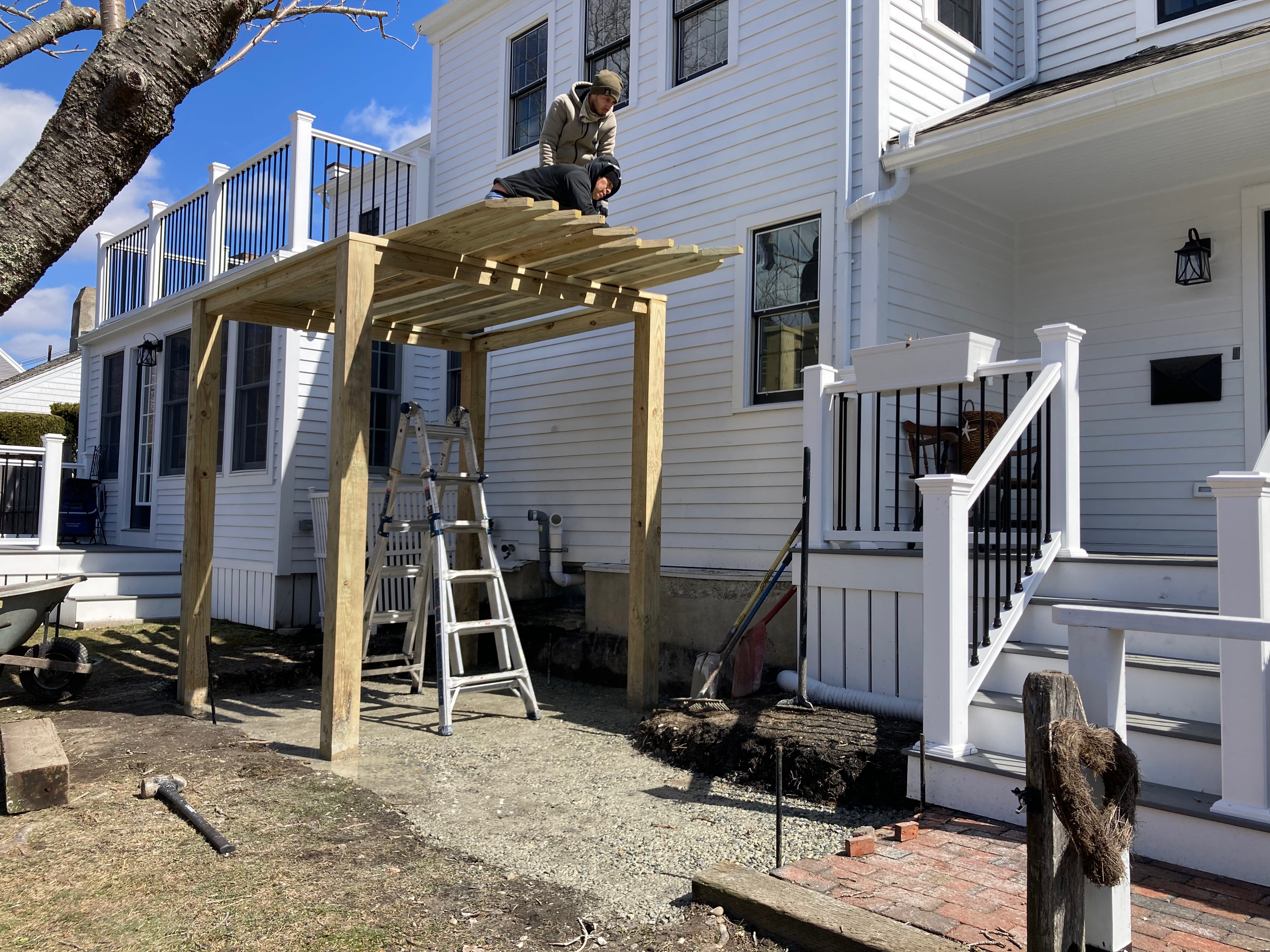
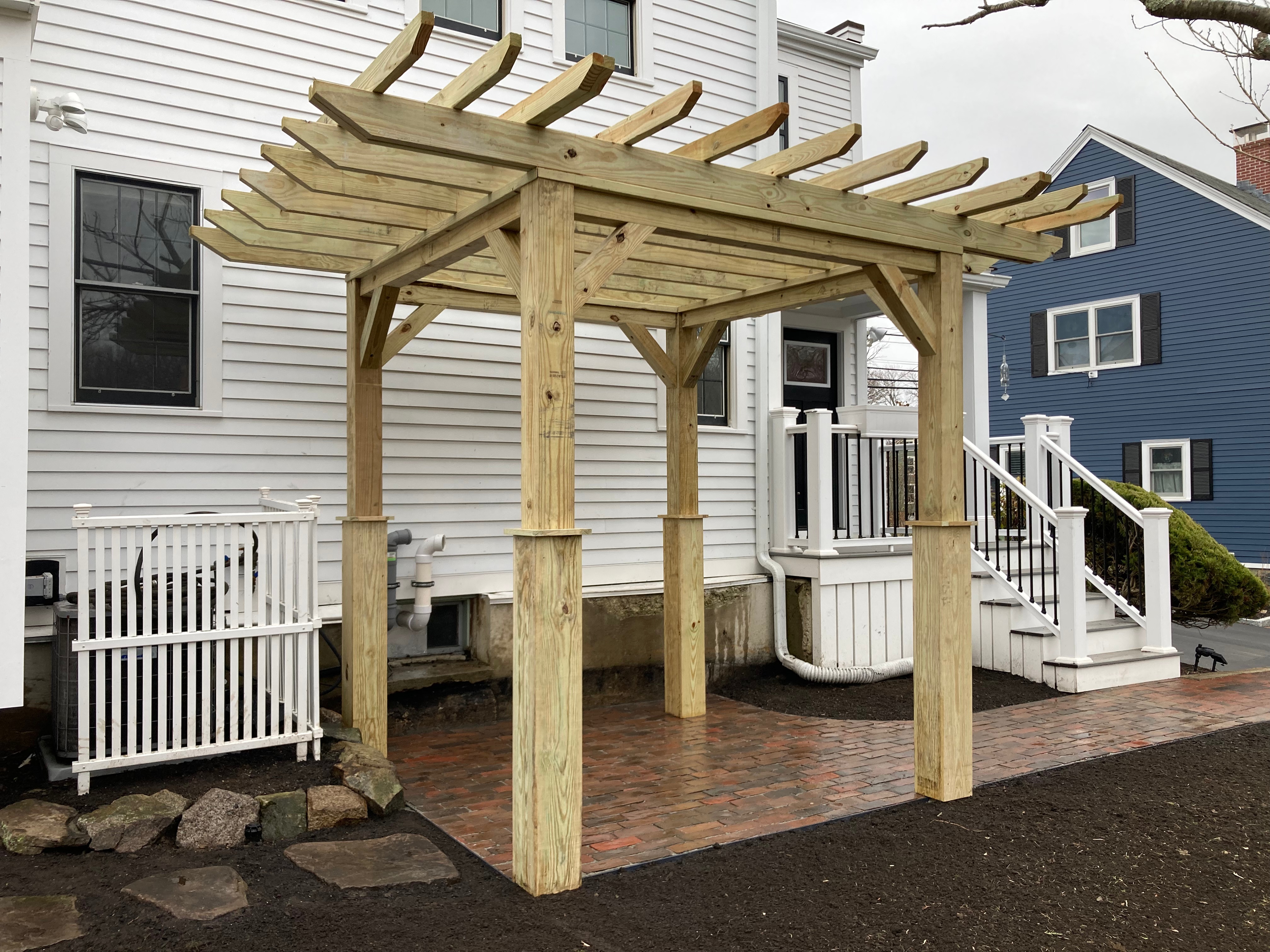
With the concrete cured and the posts standing firm, we set the initial beams across the foundational structure, establishing the framework that everything else would follow. From there, the process became one of careful measurement and custom cutting — each crossbeam shaped on site to fit the precise dimensions of the space. The pergola was designed to hang off the outer edges, bridging the gap between the house and the deck in a way that felt deliberate and built-in rather than added on.
This kind of detail is what separates a truly custom structure from something prefabricated — every angle, every overhang, every joint was considered in relation to the space around it. As the crossbeams went up one by one, the backyard began to take on a completely different character, the open sky above starting to give way to something that felt sheltered, defined, and unmistakably intentional.
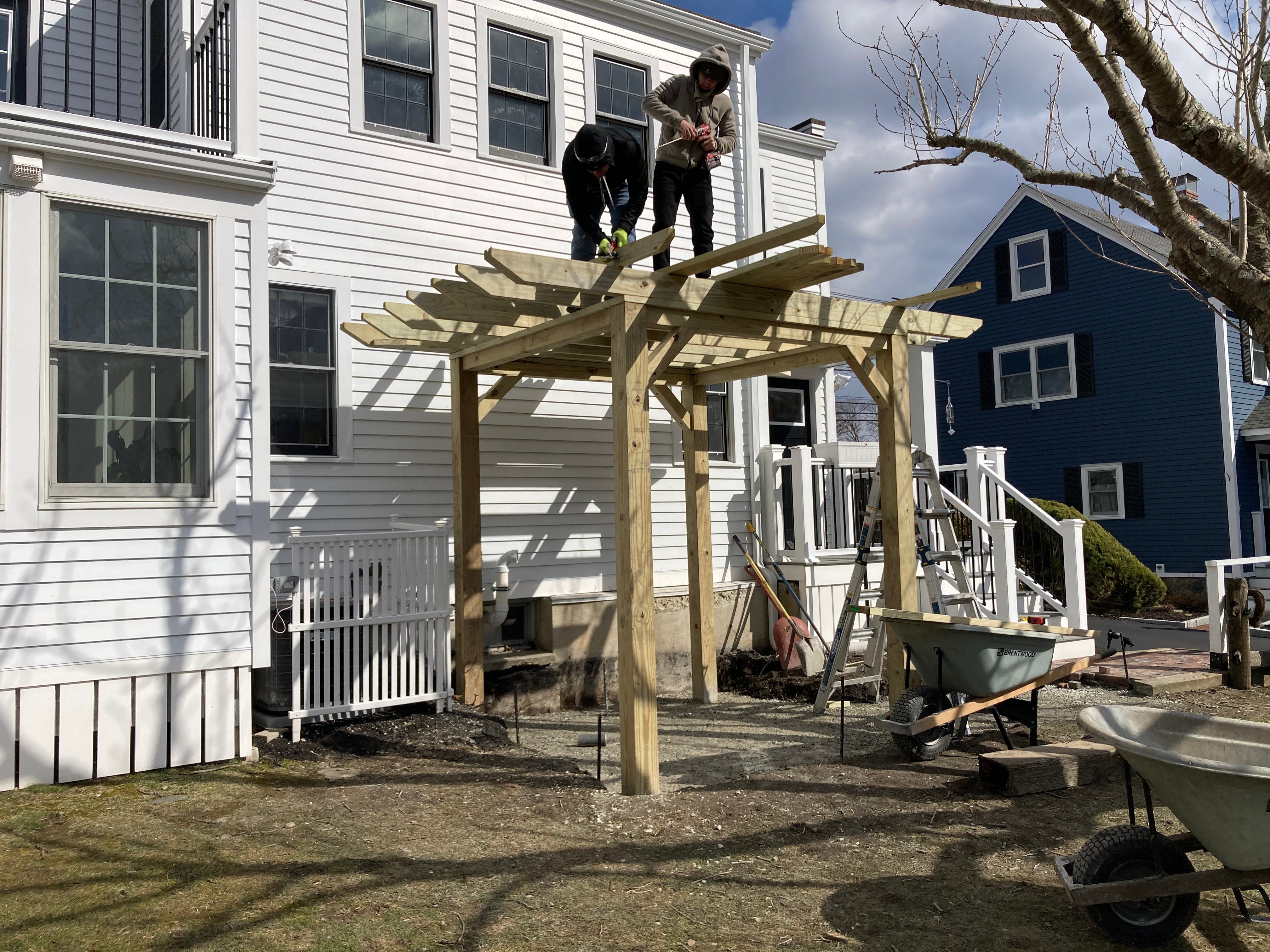
Once the main crossbeams were in place, attention shifted to the finer details that would give the pergola its character. Trim pieces were added methodically, each one selected and cut to contribute to a deliberate pattern taking shape overhead. The design called for a cross pattern built from boards of varying widths, creating a layered, textured ceiling that drew the eye upward and added a sense of craftsmanship that went far beyond simple framing.
Smaller boards were woven between the larger ones, tightening the pattern and giving the structure a finished, almost architectural quality. It was this kind of detail work — slow, precise, and unrushed — that transformed the pergola from a functional shade structure into something that felt genuinely handcrafted and worth admiring from every angle.
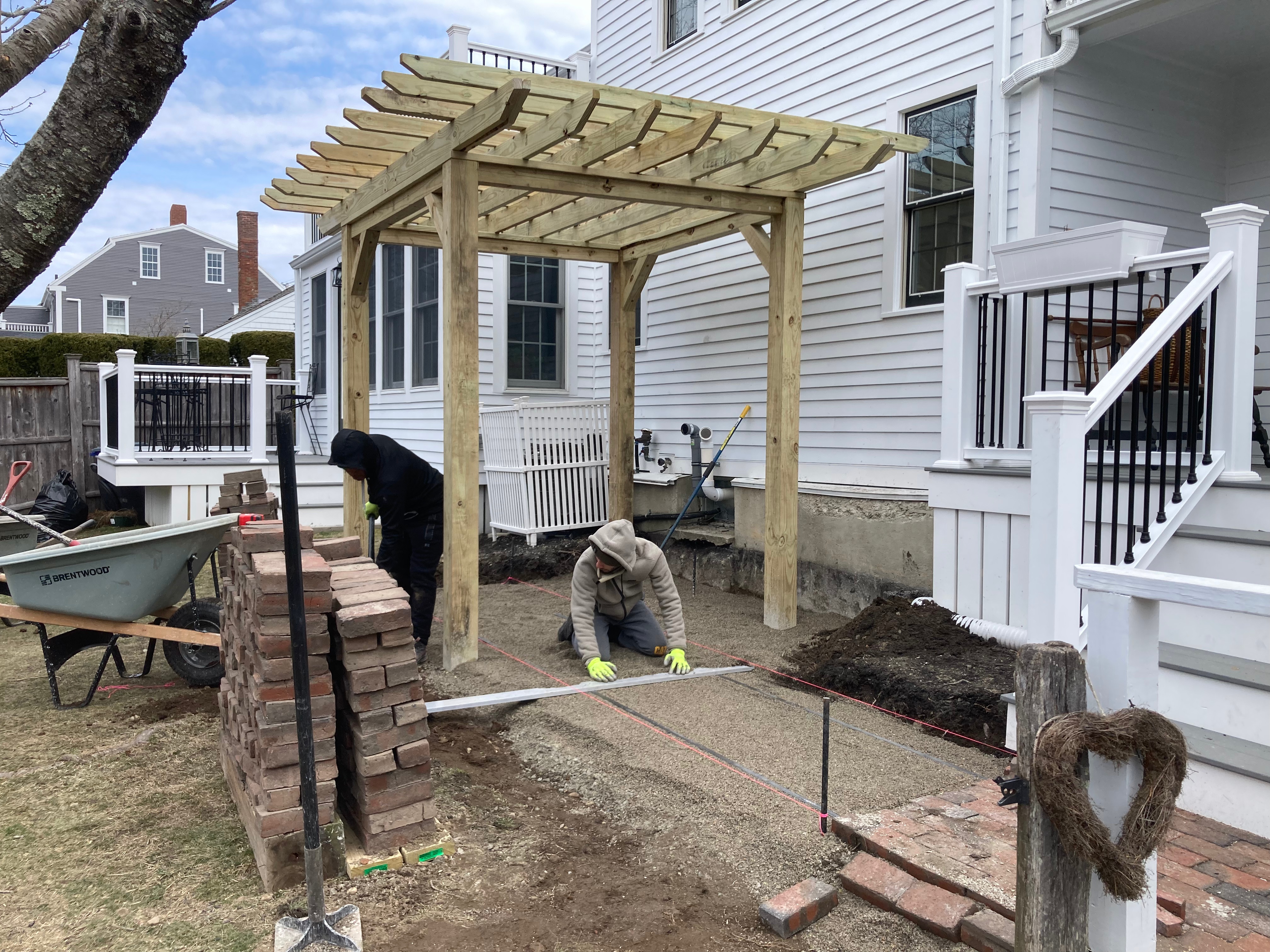
With the pergola nearing completion overhead, work shifted down to the ground where the patio was beginning to take shape beneath our feet. A layer of quarter-inch stone was spread evenly across the compacted gravel base, serving as the final leveling surface before the bricks would be laid. Using string lines set at precise elevations across the site, we worked the stone smooth with a screed bar — a process that demands patience and a steady hand to get right. Every pass of the bar brought the surface closer to perfect, ensuring that the finished patio would sit level and true without so much as a wobble beneath your step.
For the patio surface itself, we selected a historic New England brick, chosen specifically for the rustic texture and weathered character it brings to a space like this — the kind of material that looks like it has always belonged right where it’s placed.
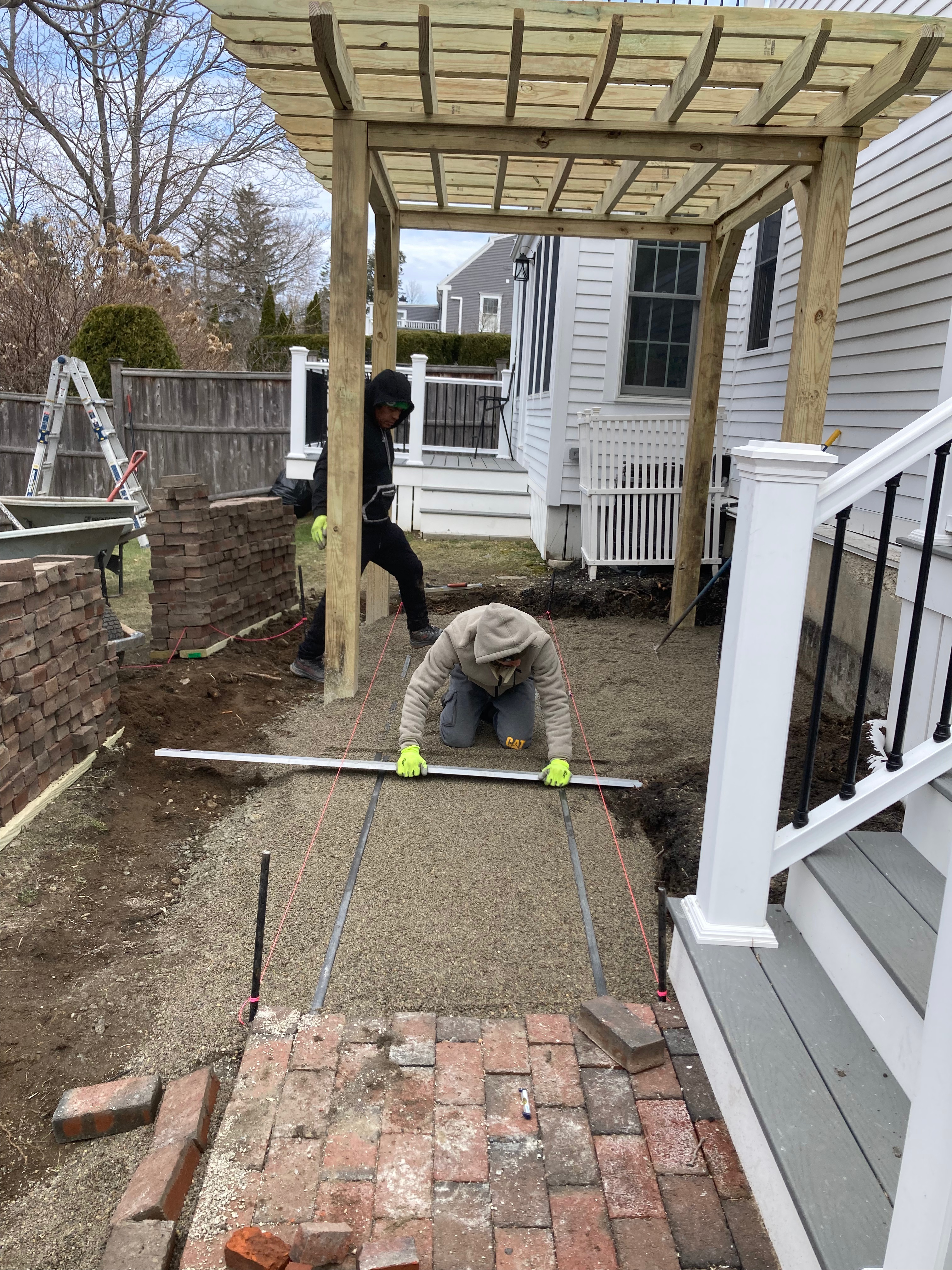
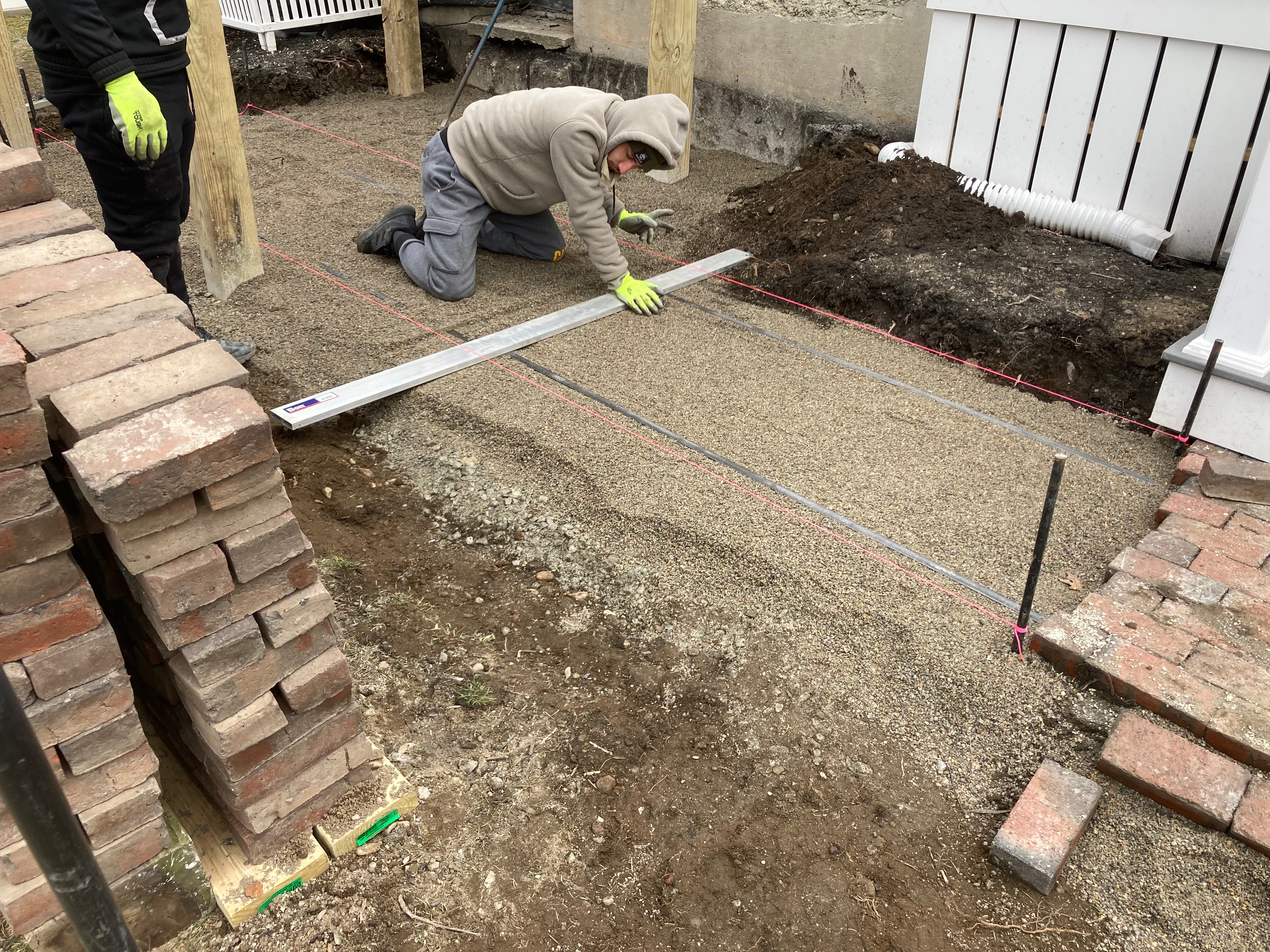
With the stone base screeded smooth, the brickwork began in earnest. Edge restraints were secured along every perimeter and corner, creating a firm boundary that would hold the pattern tight and prevent any outward movement over time. The bricks were laid course by course, each one set firmly into the stone bed and carefully aligned across the entire surface. Where full bricks couldn’t complete the layout — along borders, around posts, and at angled corners — precise cuts were made on site to fill every gap cleanly. The historic New England brick knitted together seamlessly, producing a surface that was as structurally sound as it was visually striking.
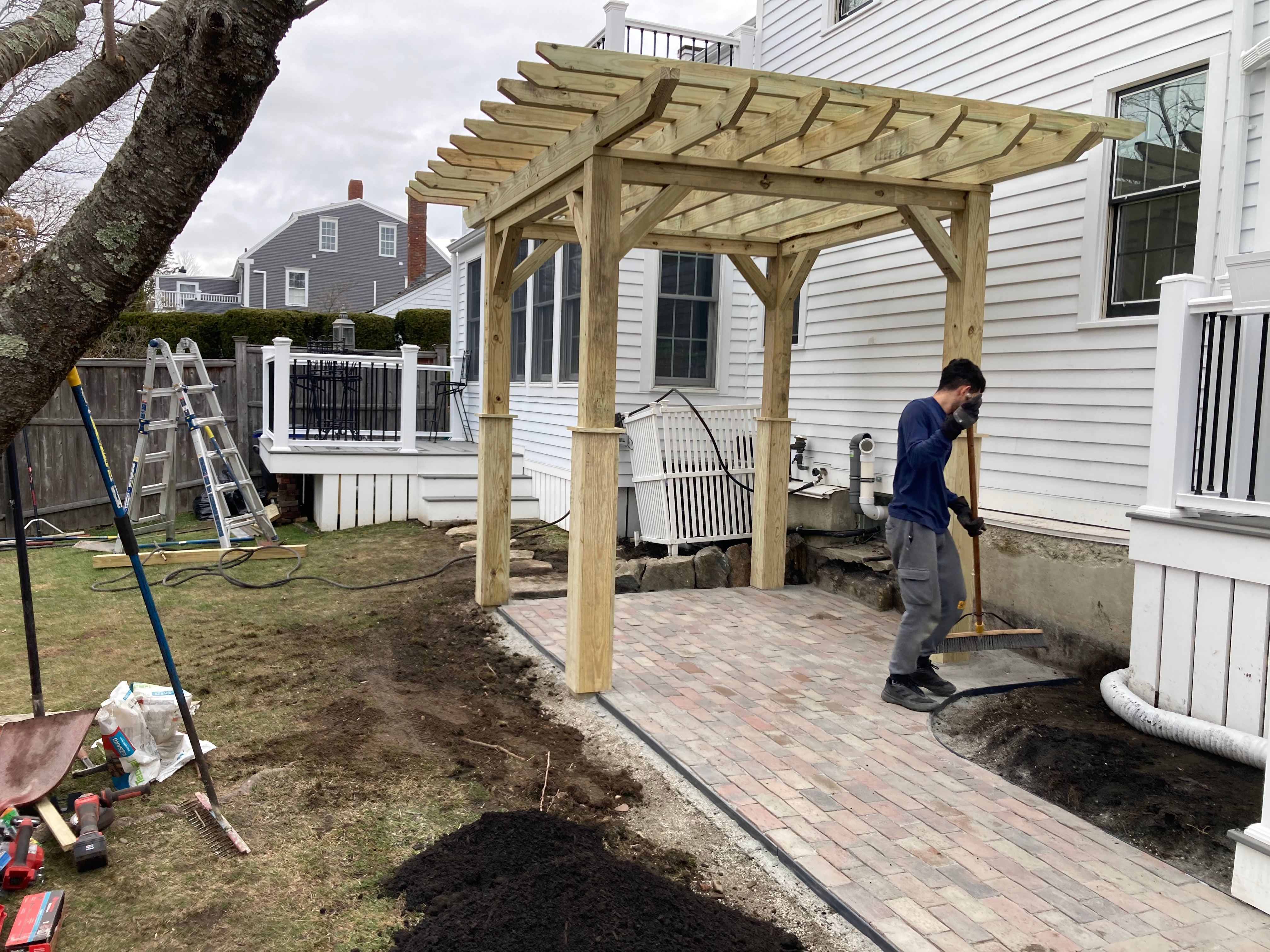
Once the brick surface was fully laid, fine sand was swept across the entire patio and worked into every joint, locking each brick firmly in place and giving the surface its final, finished feel. A small stone wall was constructed at the corner of the house to hold back the grade where an existing AC unit had created an awkward transition — a detail that needed to be addressed both functionally and aesthetically before the space could feel truly resolved.
Natural stone was selected to keep the material palette cohesive, blending seamlessly with the brick and the character of the yard. A stone path was then laid to connect the new patio to the existing porch, tying the two spaces together and creating a natural flow from one end of the yard to the other.
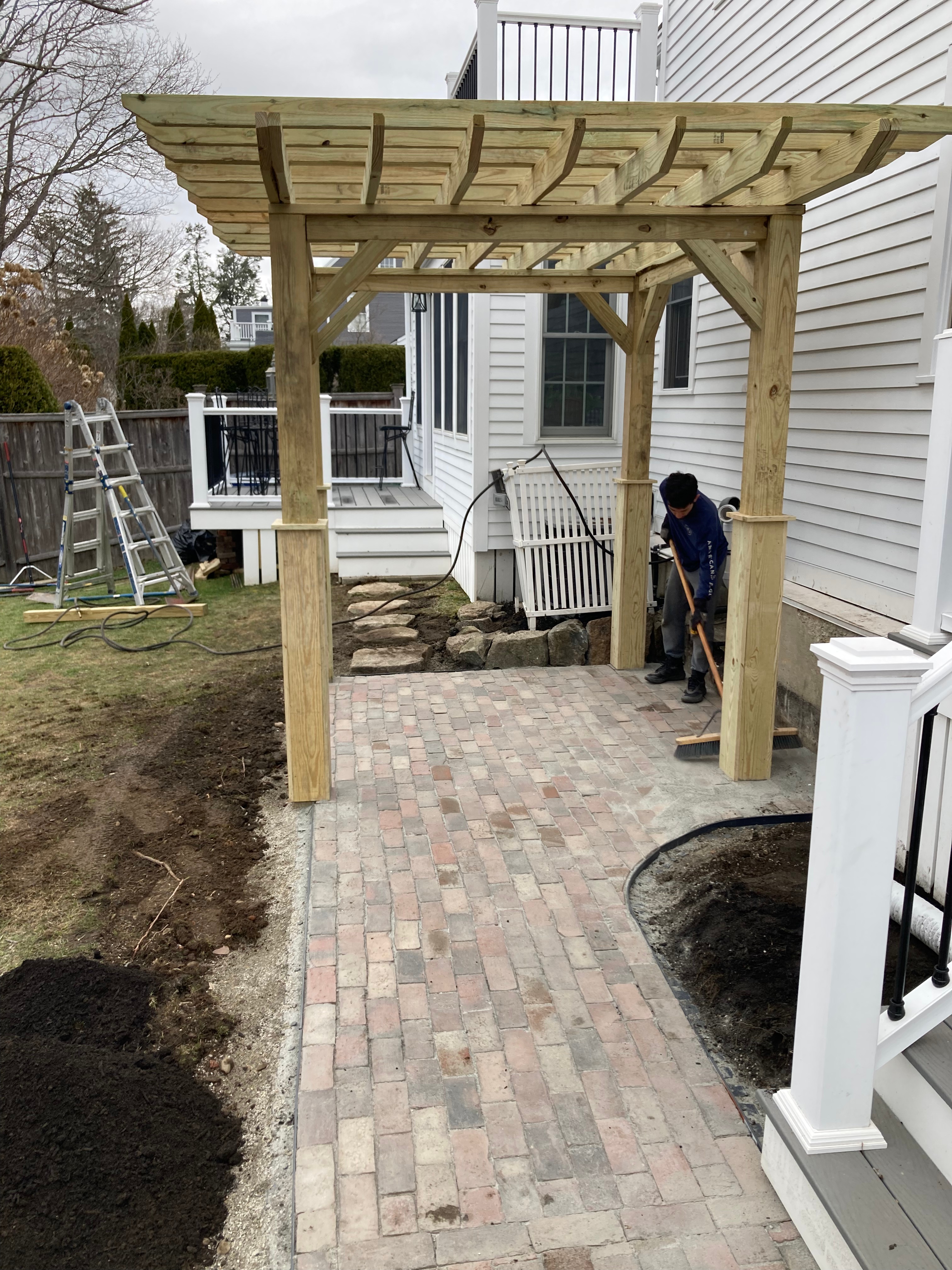
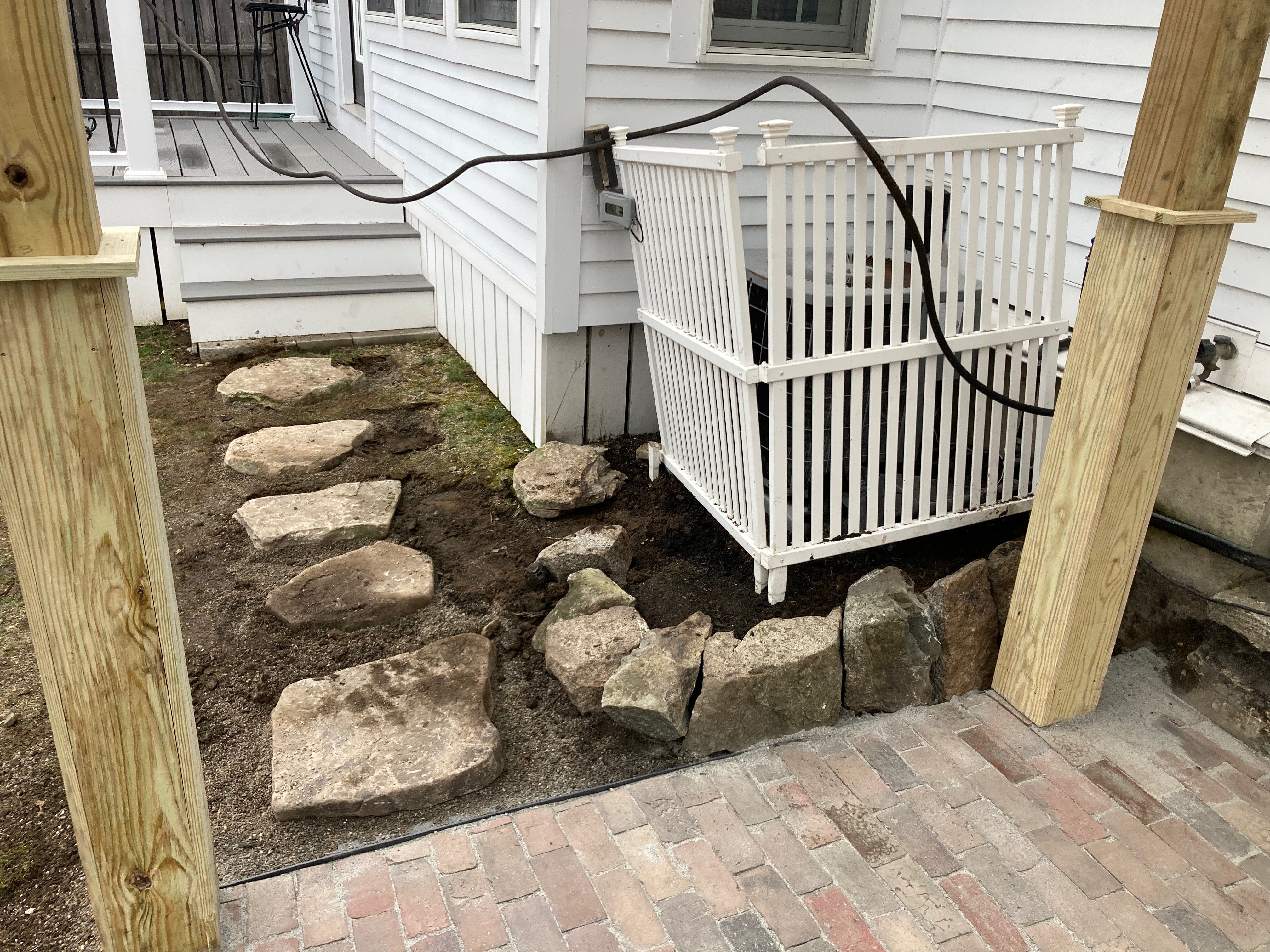
The trim work on each pergola post was the final step in completing the structure, clean lines brought all the way down to the ground and giving the frame a polished, grounded presence that felt fully resolved from top to bottom. With the woodwork finished, attention shifted back to the surrounding landscape to tie everything together. Fresh compost was spread along every edge of the patio and worked into the soil, giving the grass the best possible foundation to establish and fill in as the season progressed. The stepping stones received the same treatment, each one bordered with rich compost that would gradually knit the hardscape into the living landscape around it.
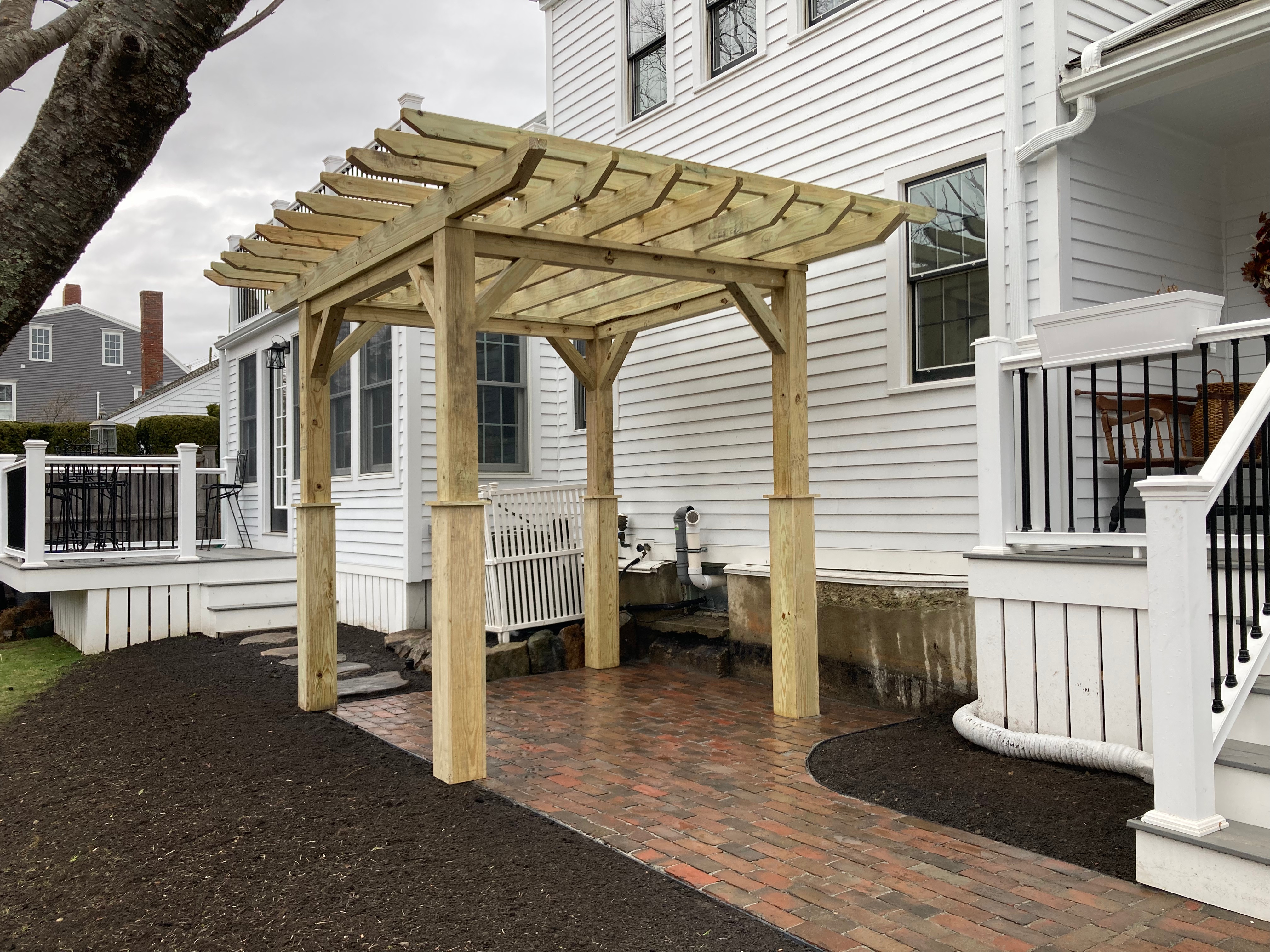
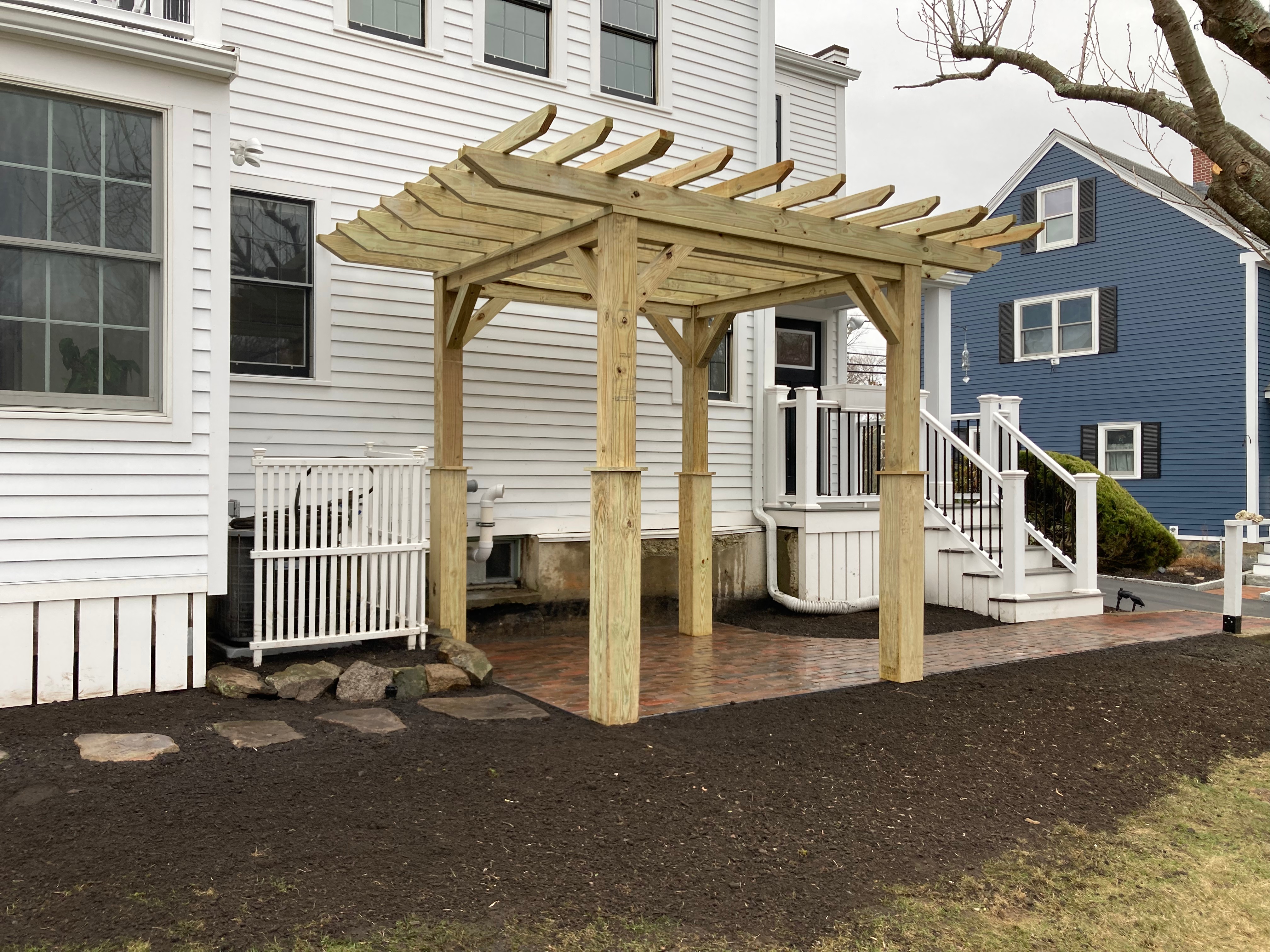
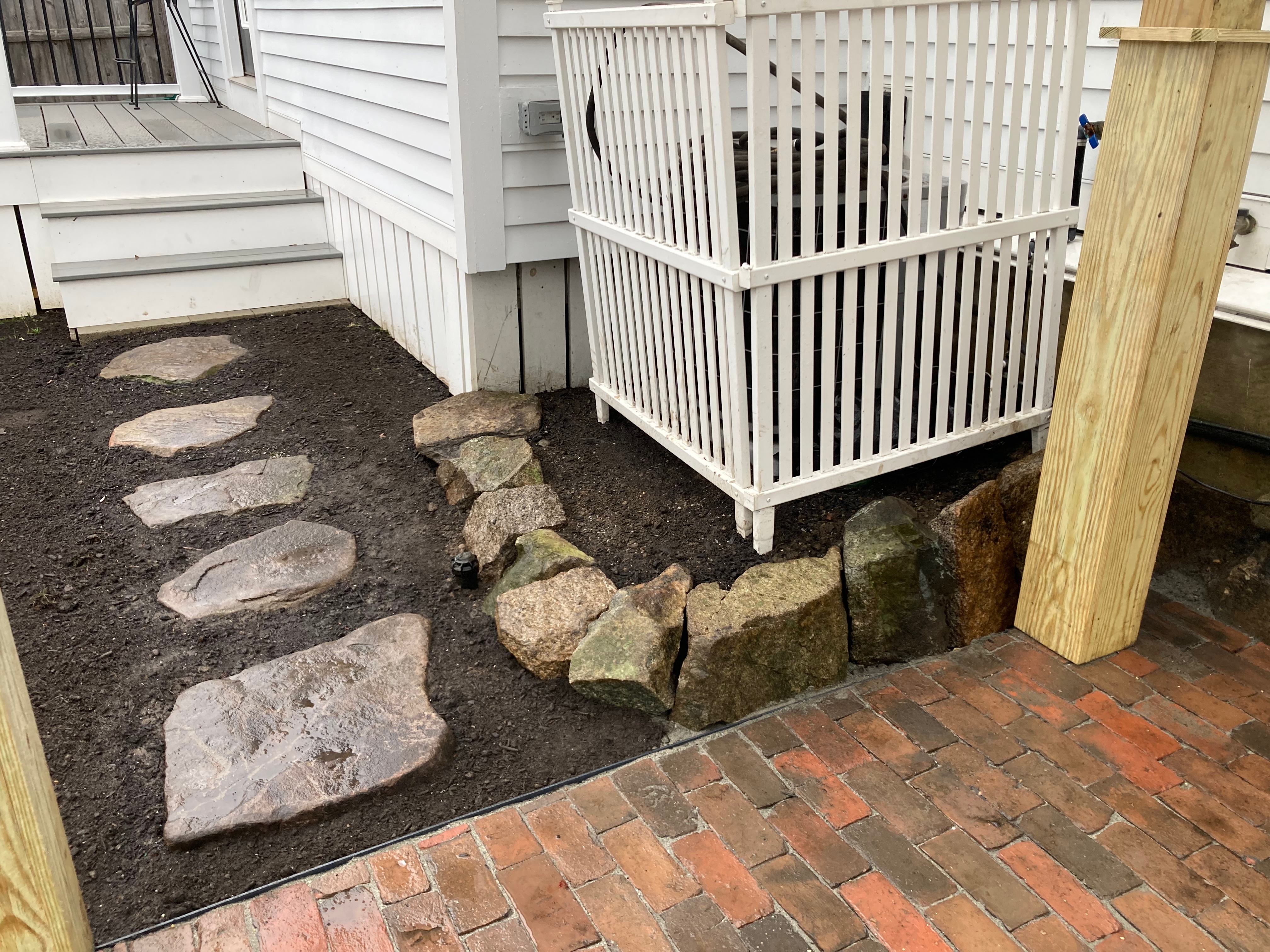
Now we wait — and in New England, spring has a way of doing the finishing work better than any crew could. The compost-rich edges will green up on their own schedule, grass threading its way between stone and brick until the yard feels like it has always been this way. But the project doesn’t end here. The pergola still needs paint, tying the woodwork into a finished, cohesive look that connects the structure to the house it was built to complement. A final skirt around the foundation will complete the picture, framing the base of the home with the same care and intention that guided every phase of this build.
With the crew of JMJ Gardens, a project is never truly finished until every last detail has been seen through — and that is exactly the standard we hold ourselves to.



 JMJ Gardens
Leave a comment