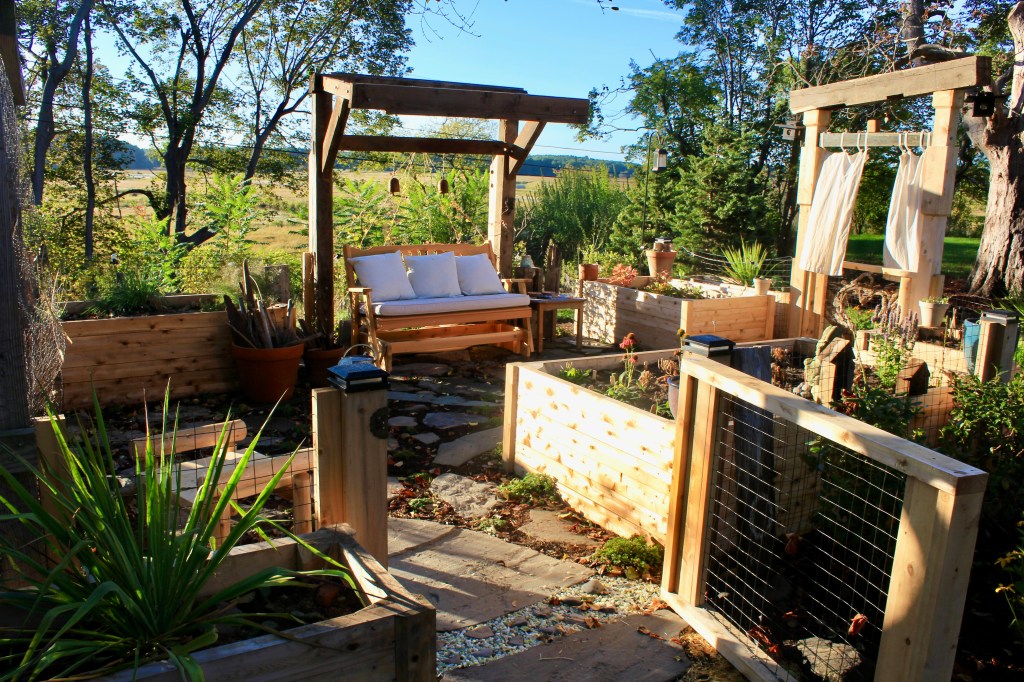
At JMJ Gardens, our work blends the precision of woodworking, the creativity of design, and the depth of knowledge that comes from years of hands-on gardening.
Each project begins with an idea — a vision of how a space should look, feel, and function — and our goal is to translate that into something lasting and beautiful. From custom-built structures and raised beds to carefully planned planting layouts, we use every aspect of our craft to create outdoor spaces that reflect the client’s lifestyle and the natural character of their property.
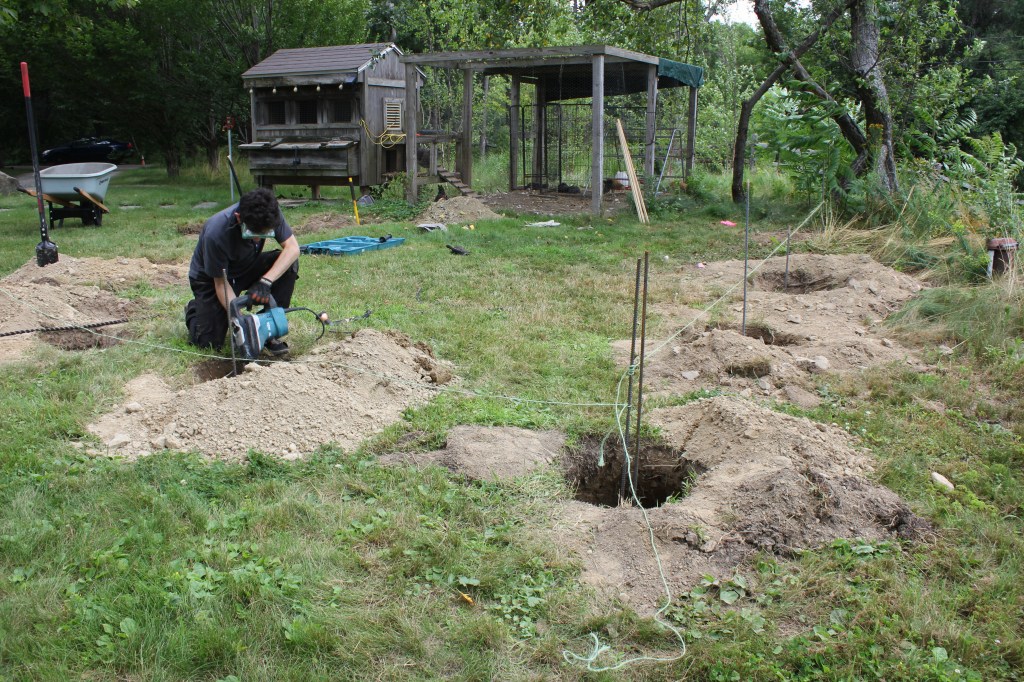
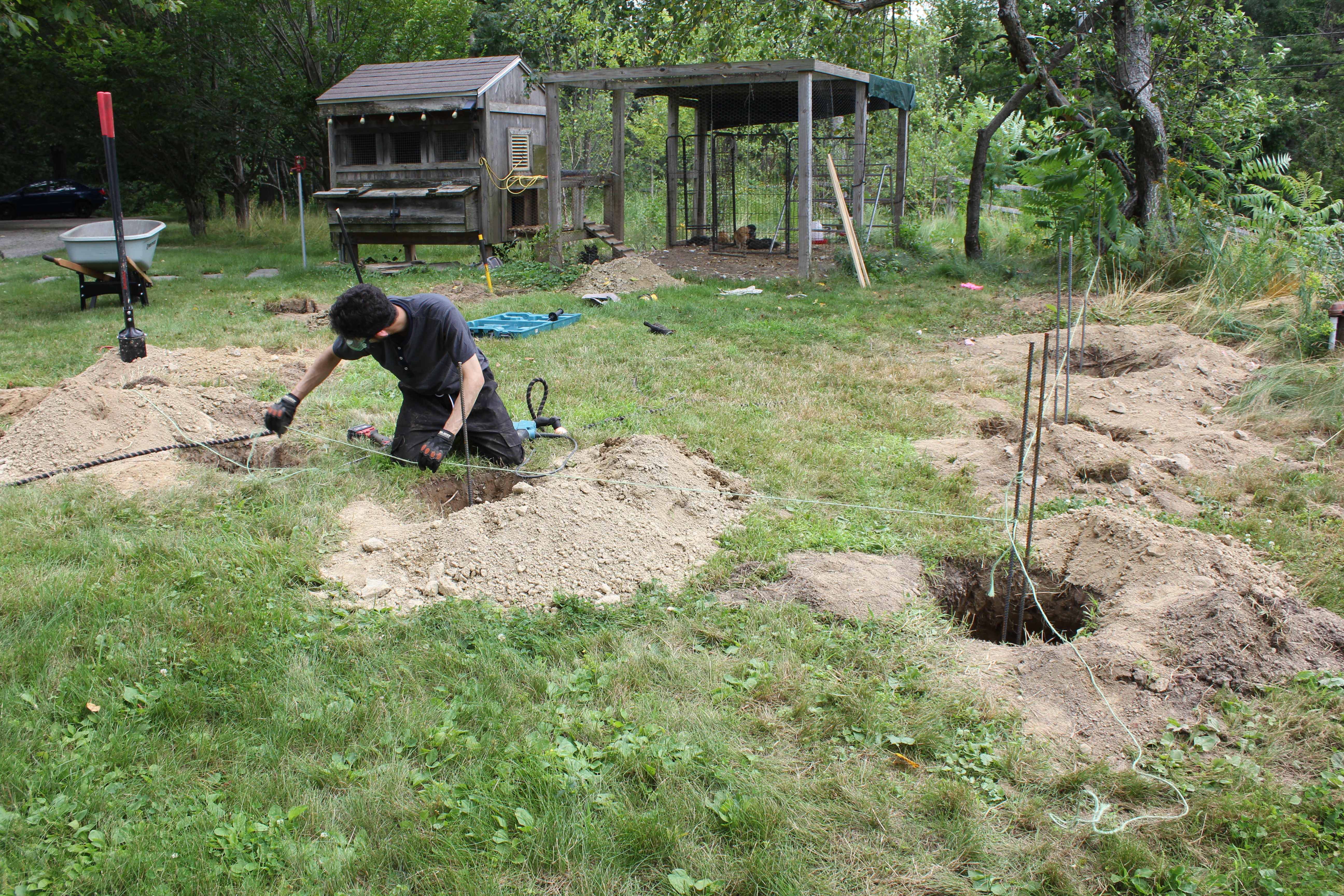
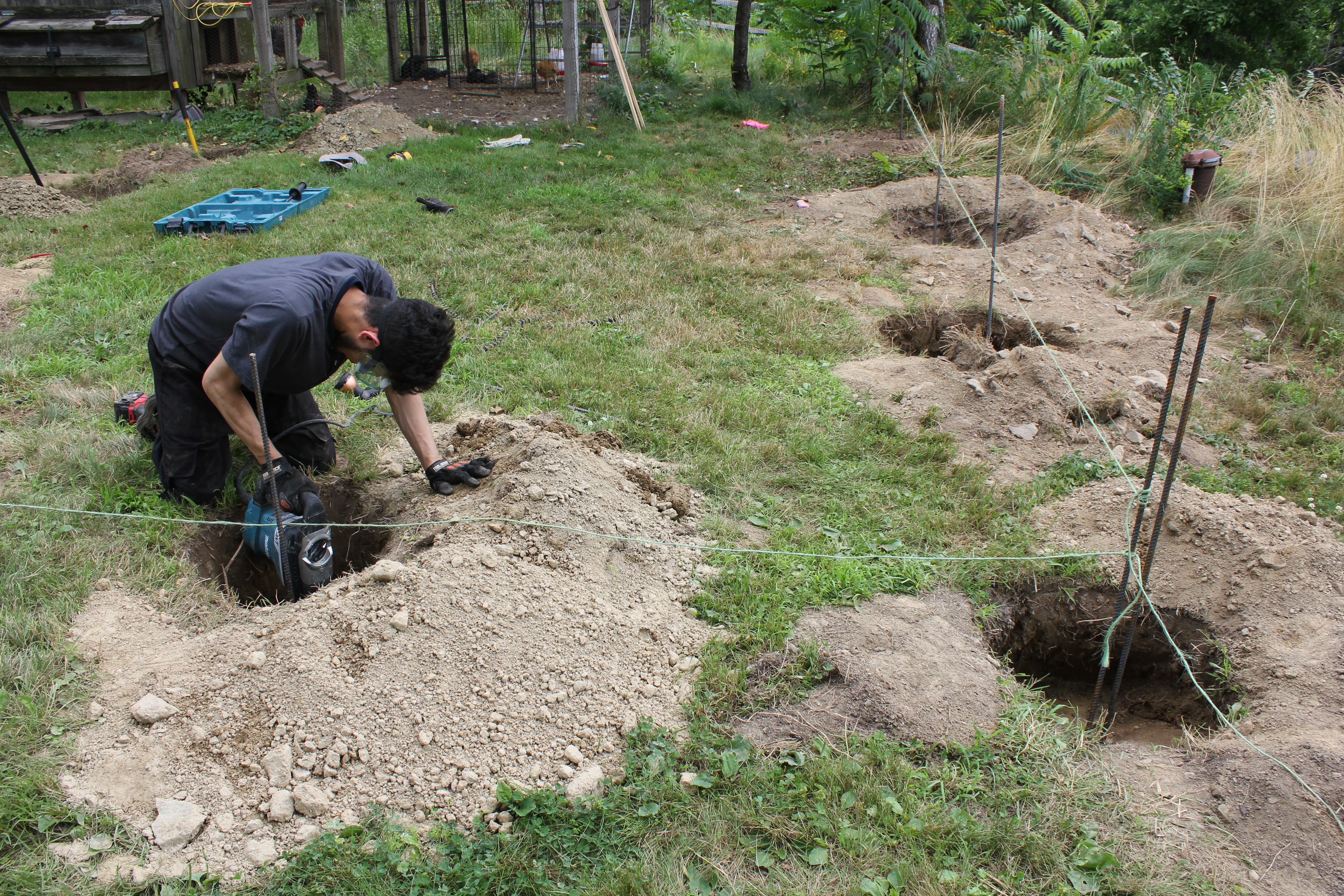
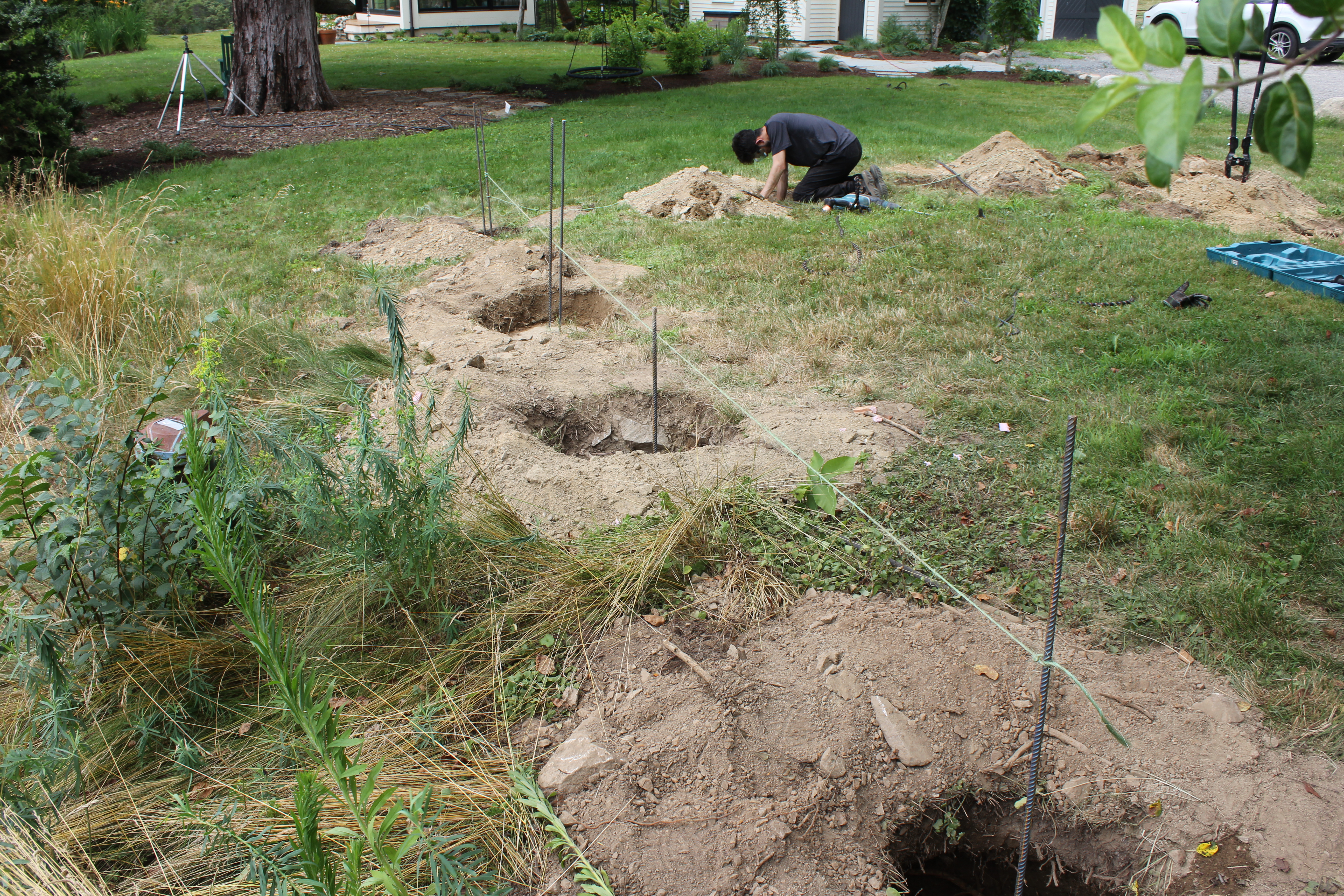
The first step in constructing the vegetable garden was setting the fence line. As we began digging the post holes, it became clear that much of the area sat on shallow ledge — a common challenge in New England landscapes.
Instead of forcing traditional post installation, we adapted our approach. Each post location was carefully exposed to the rock surface, where we drilled and pinned rebar directly into the ledge to create a secure anchor point. This method ensures long-term stability and allows the fence structure to tie seamlessly into the natural conditions of the site.
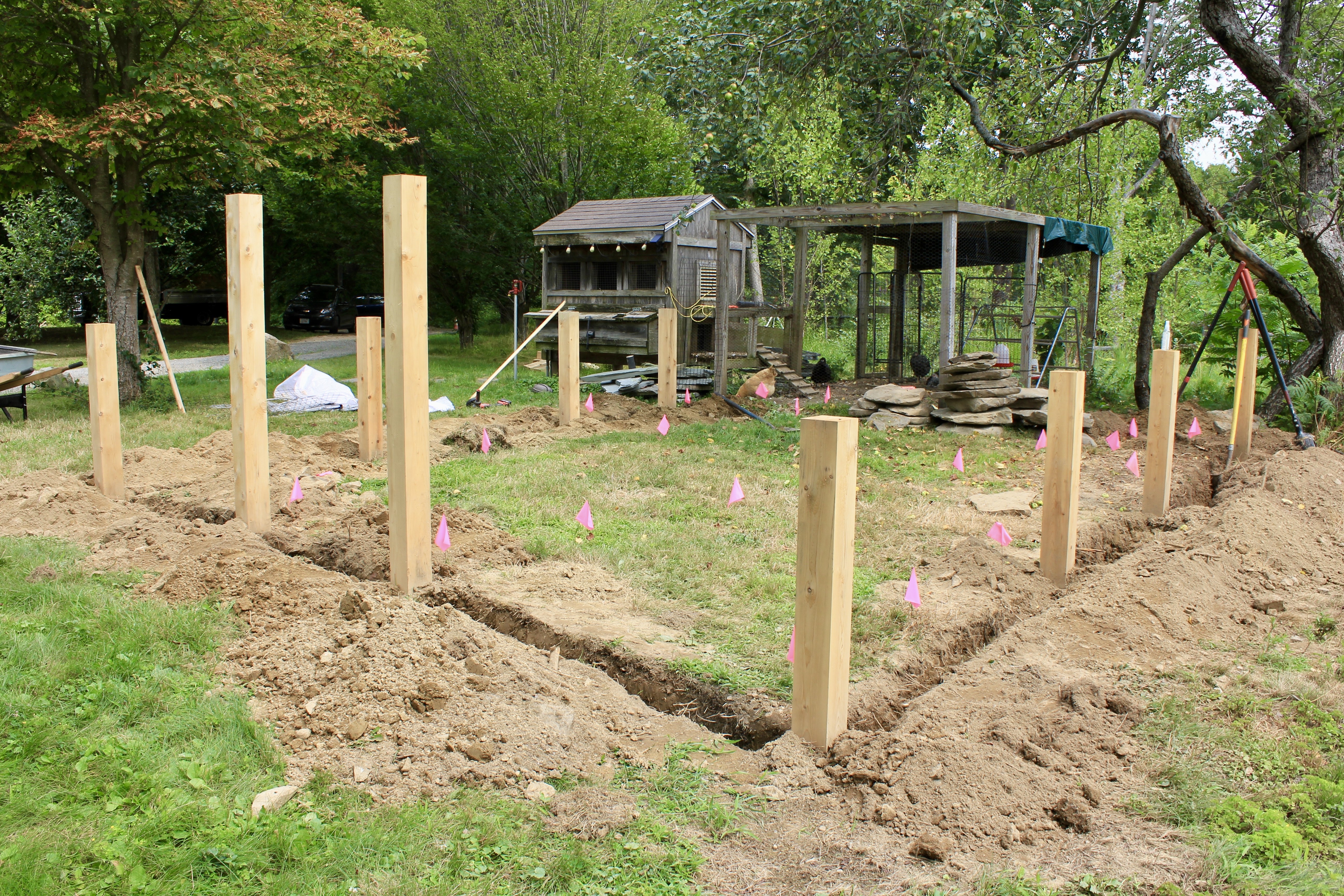
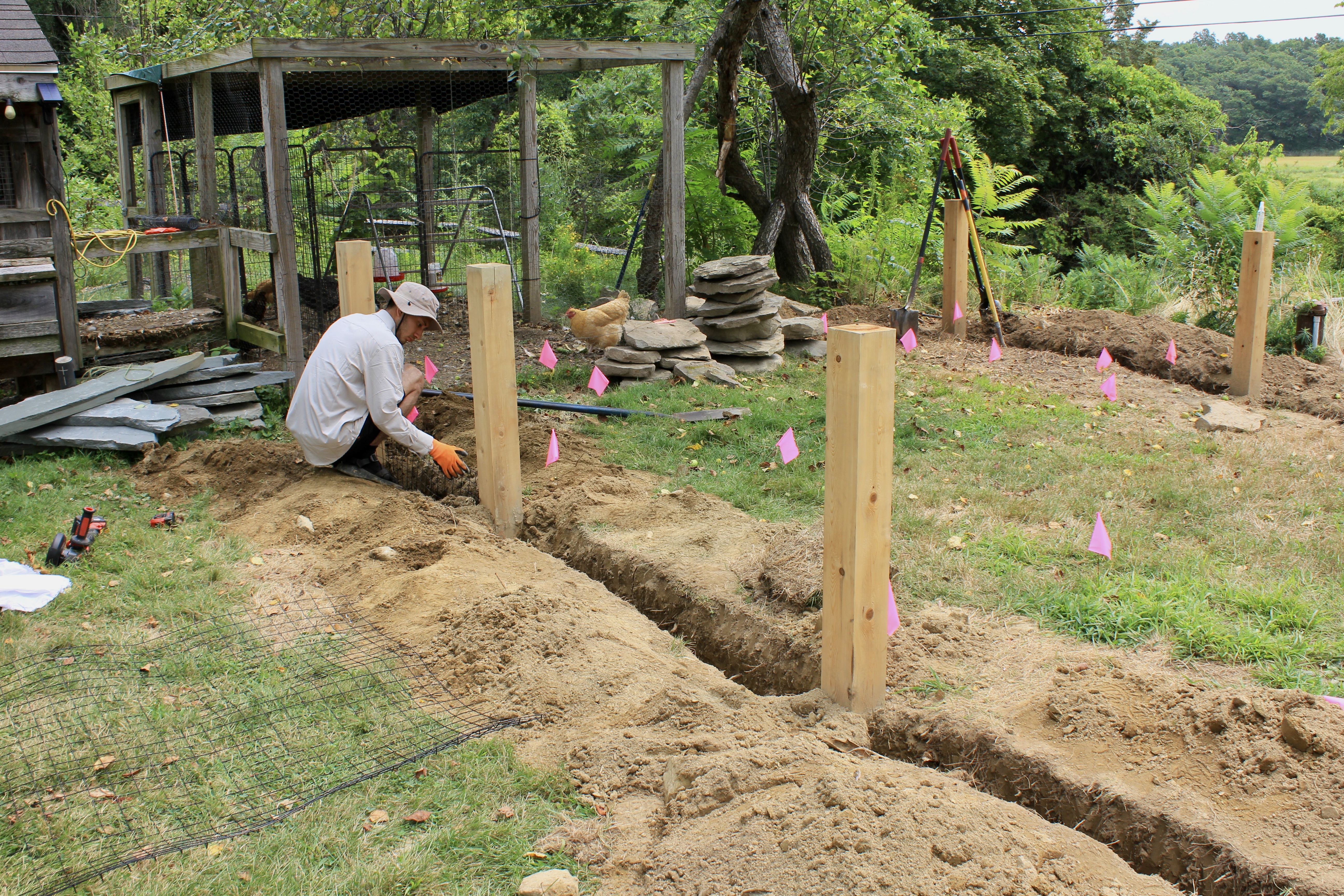
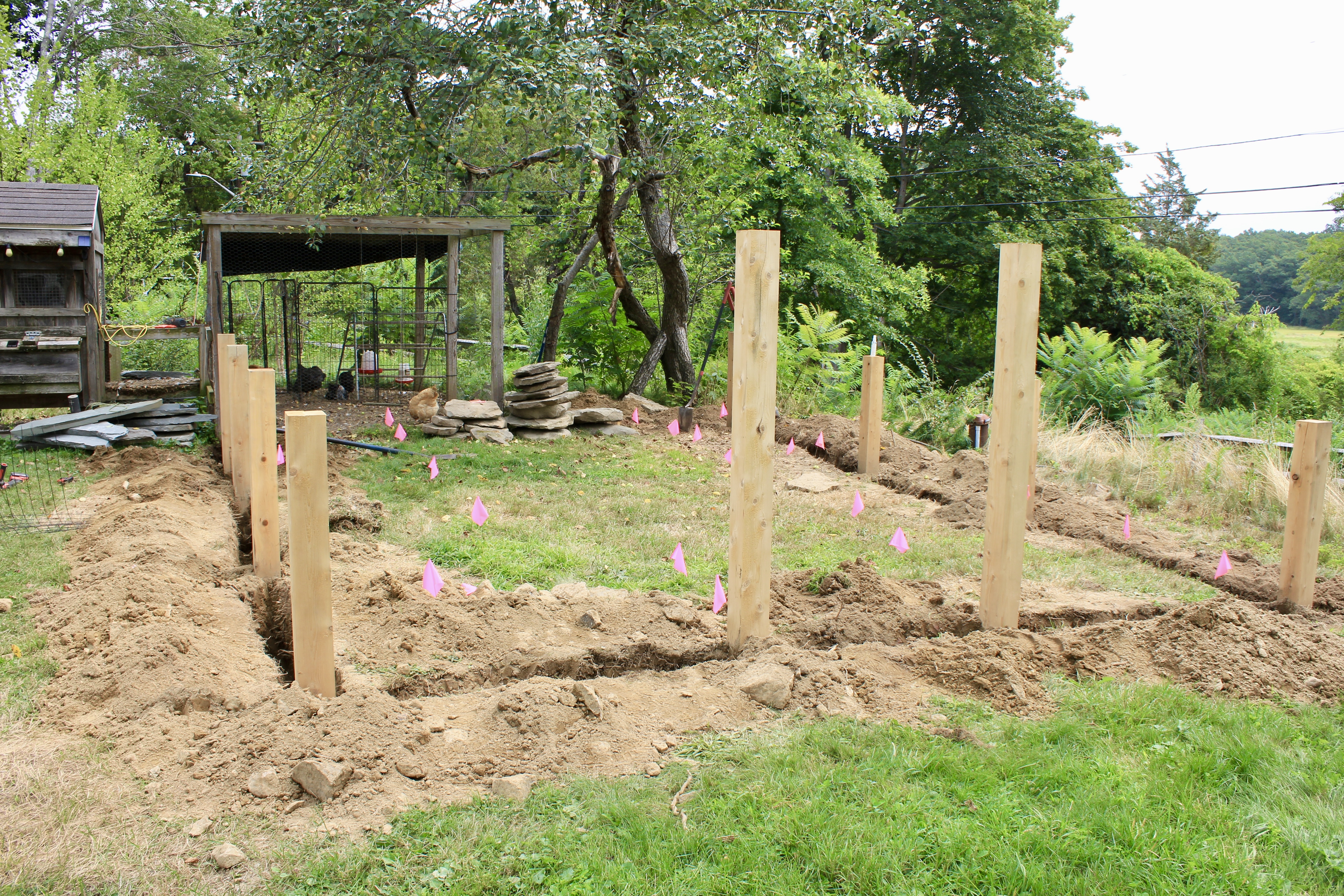
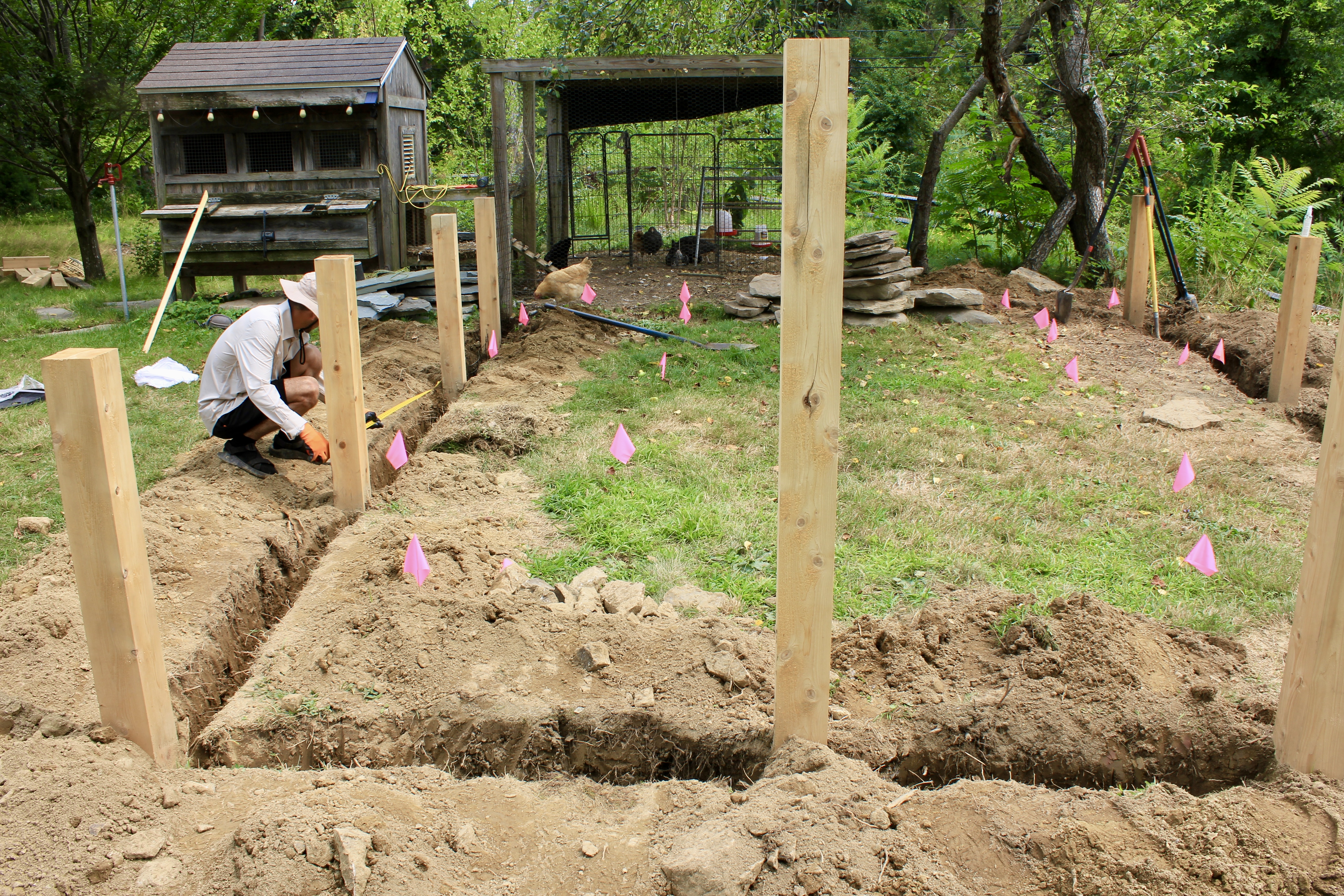
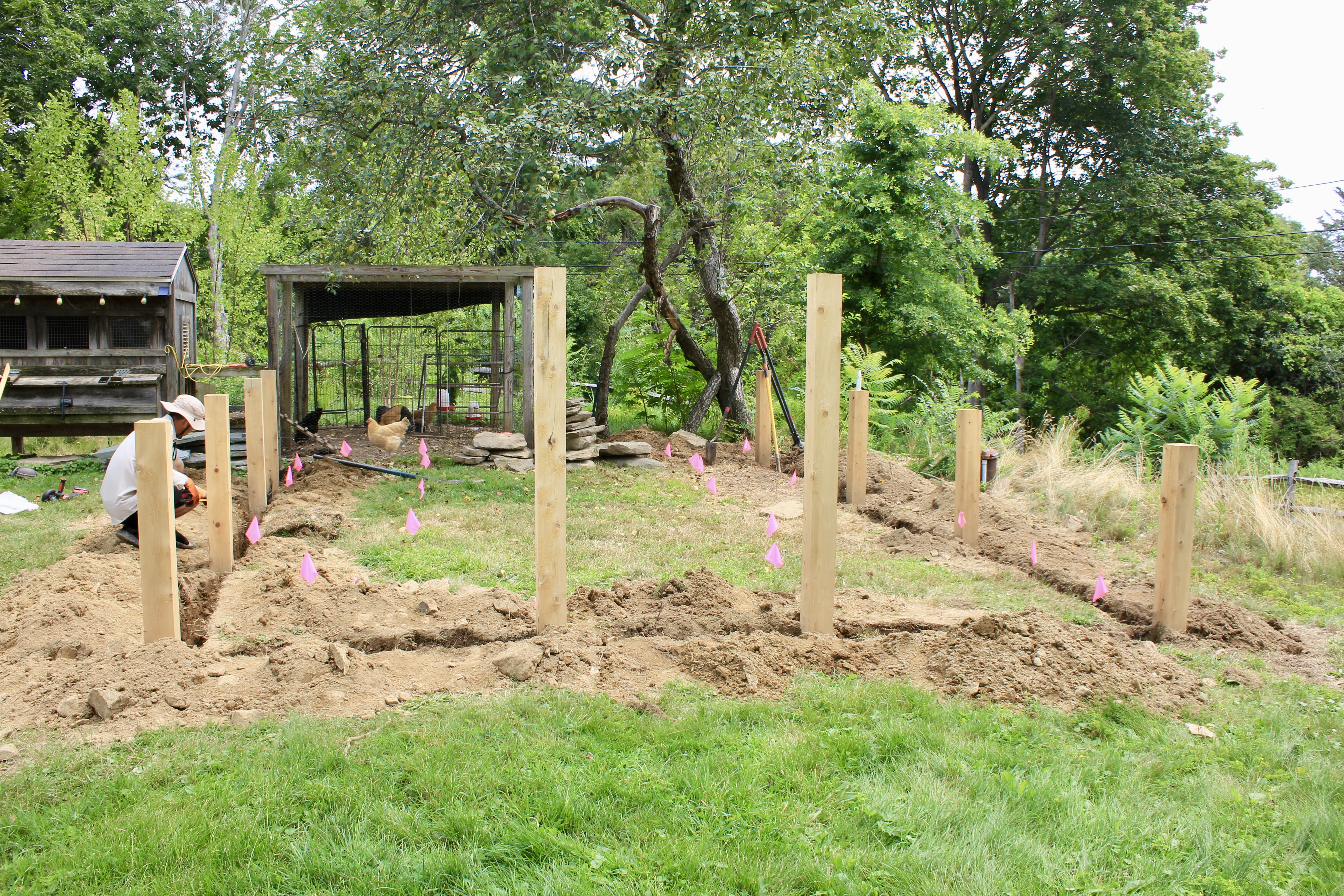
Once the rebar anchors were in place, each fence post was set in concrete to ensure lasting stability. Care was taken to align and level every post at a consistent height and spacing, creating a clean, uniform frame for the garden enclosure.
With the structure defined, we excavated a continuous three-foot trench along the fence line to properly bury the wire fencing below grade. This step is essential in vegetable garden installations, creating a barrier that prevents animals from tunneling beneath while maintaining the garden’s clean, finished appearance above ground.
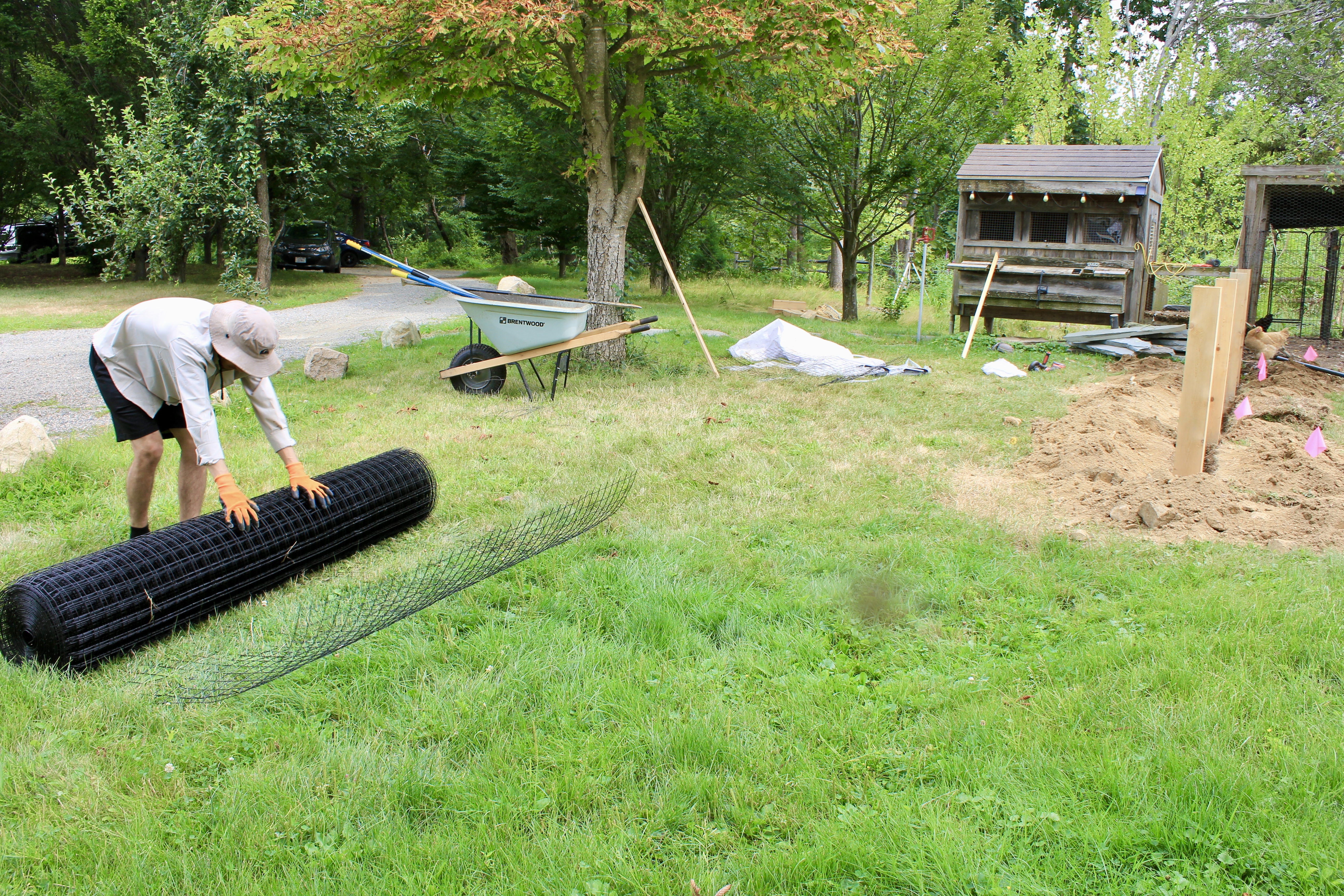
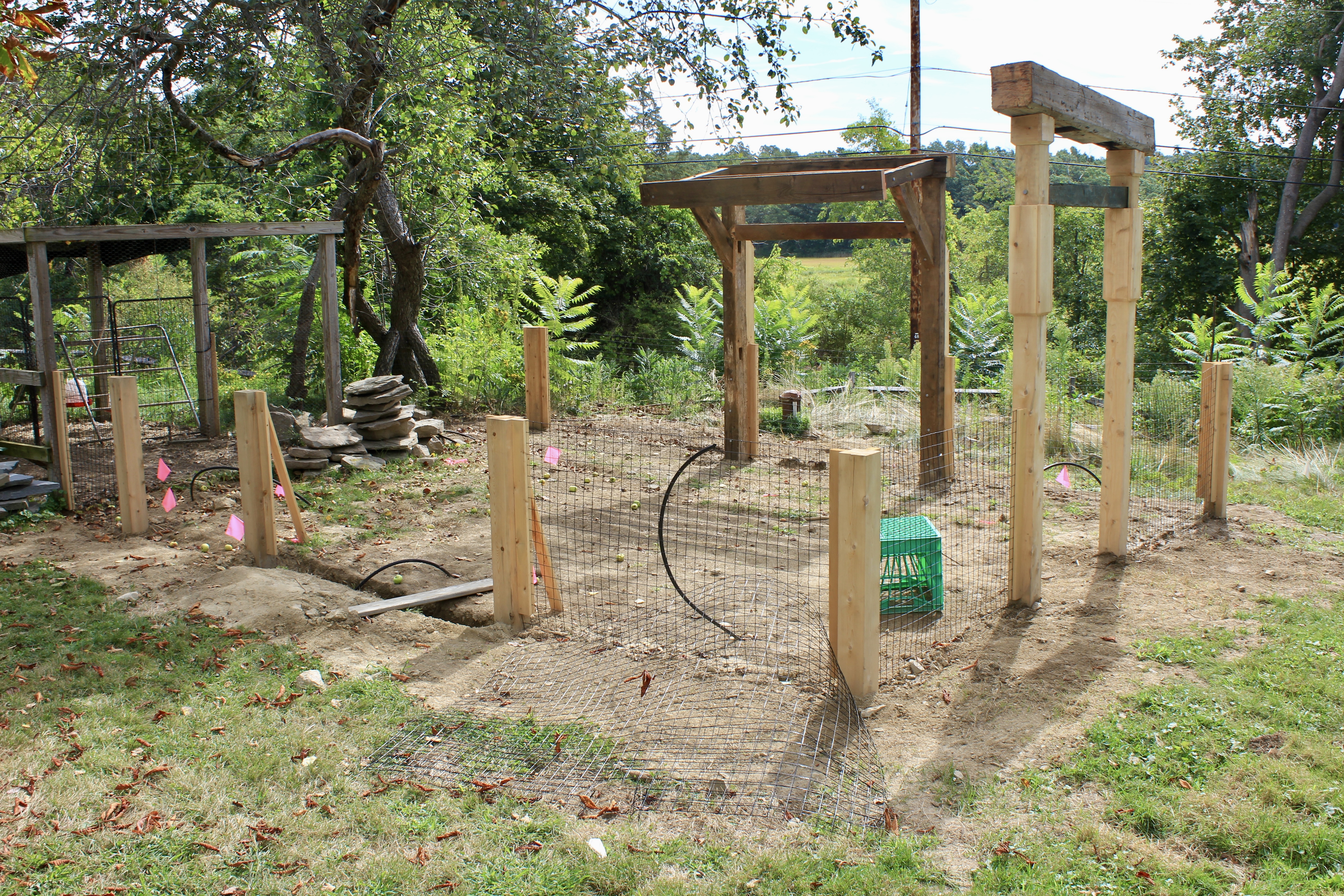
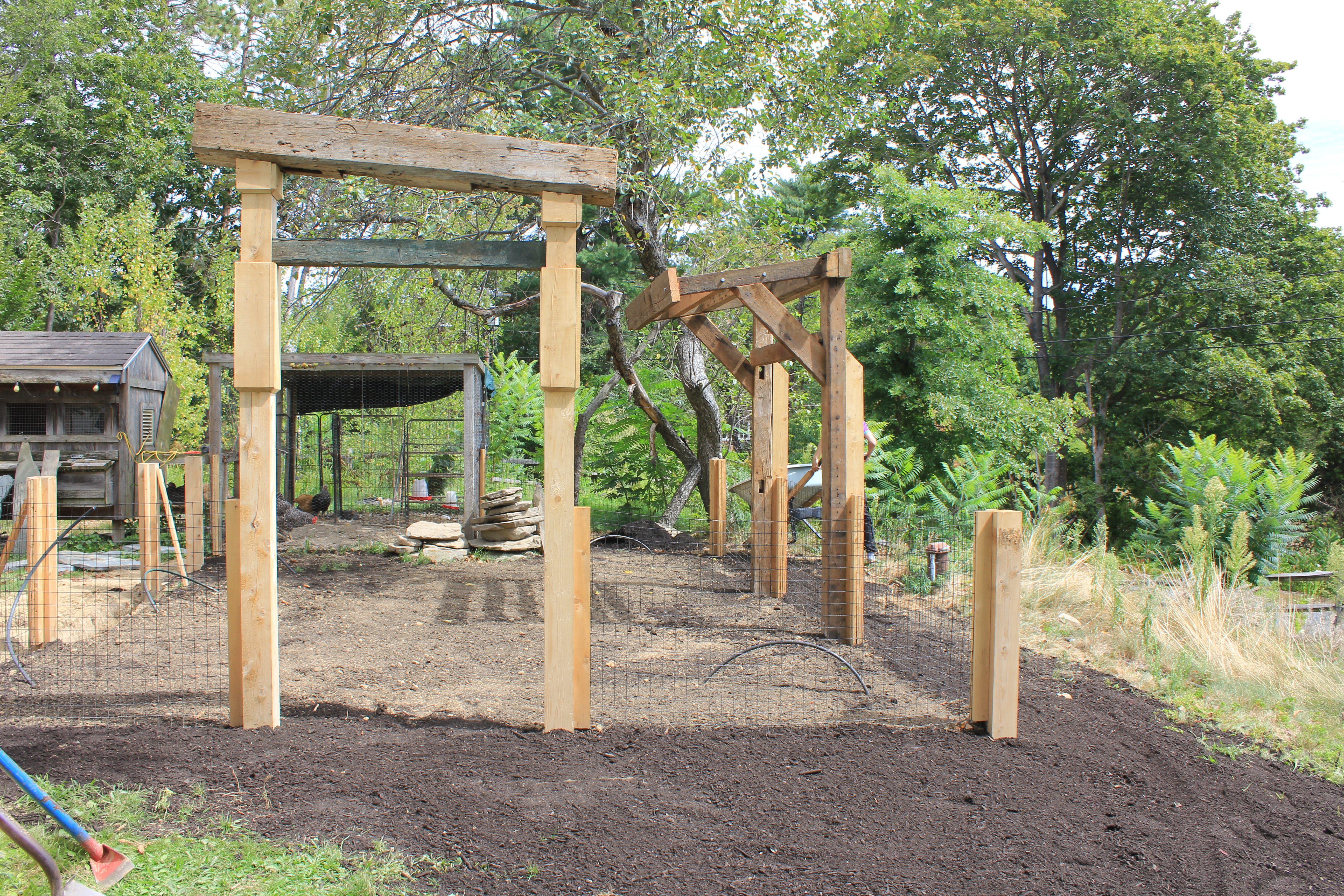
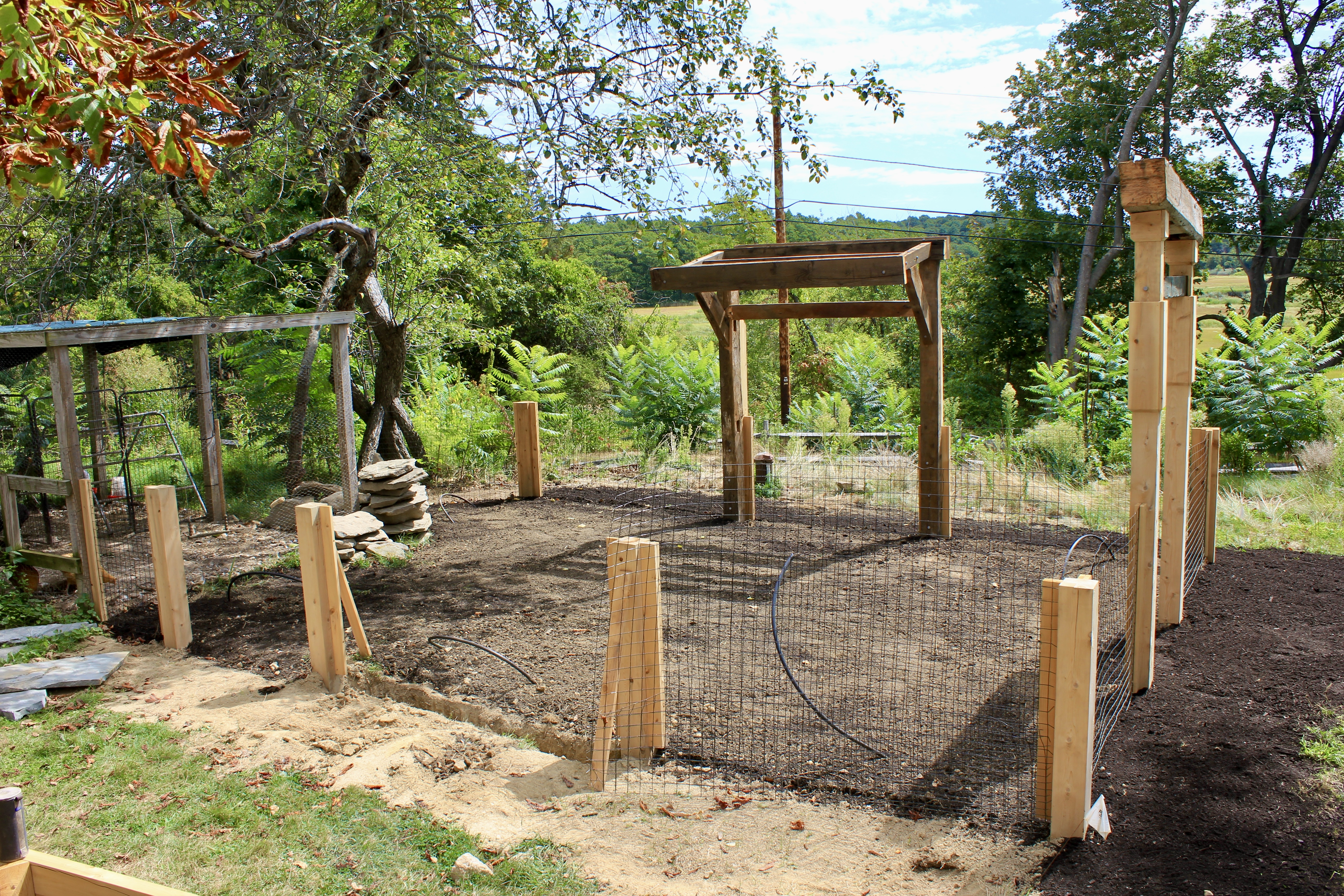
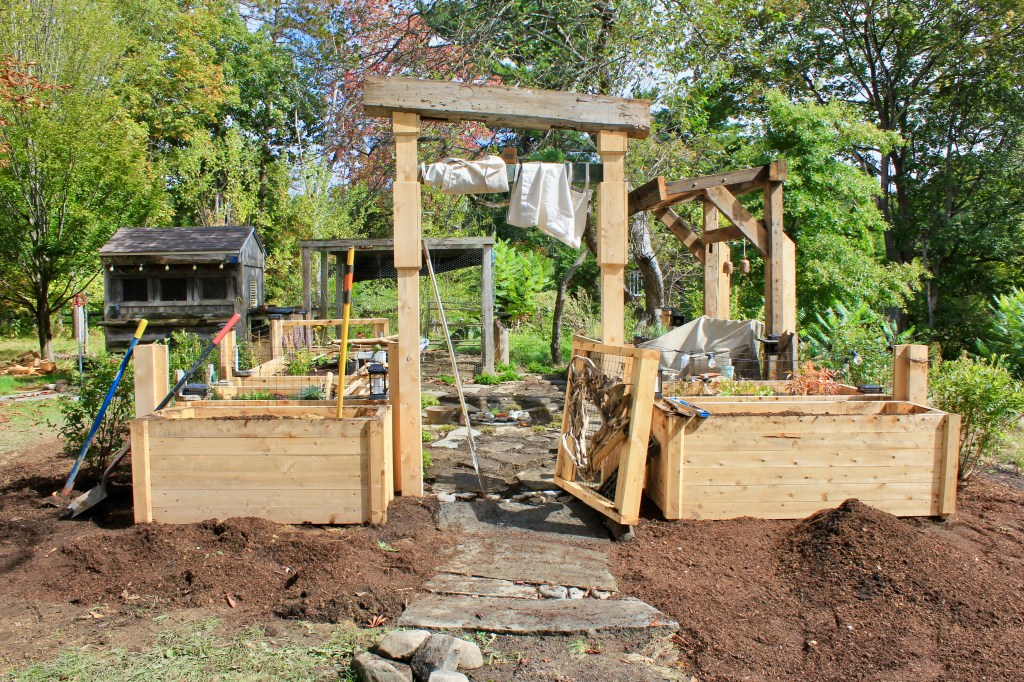
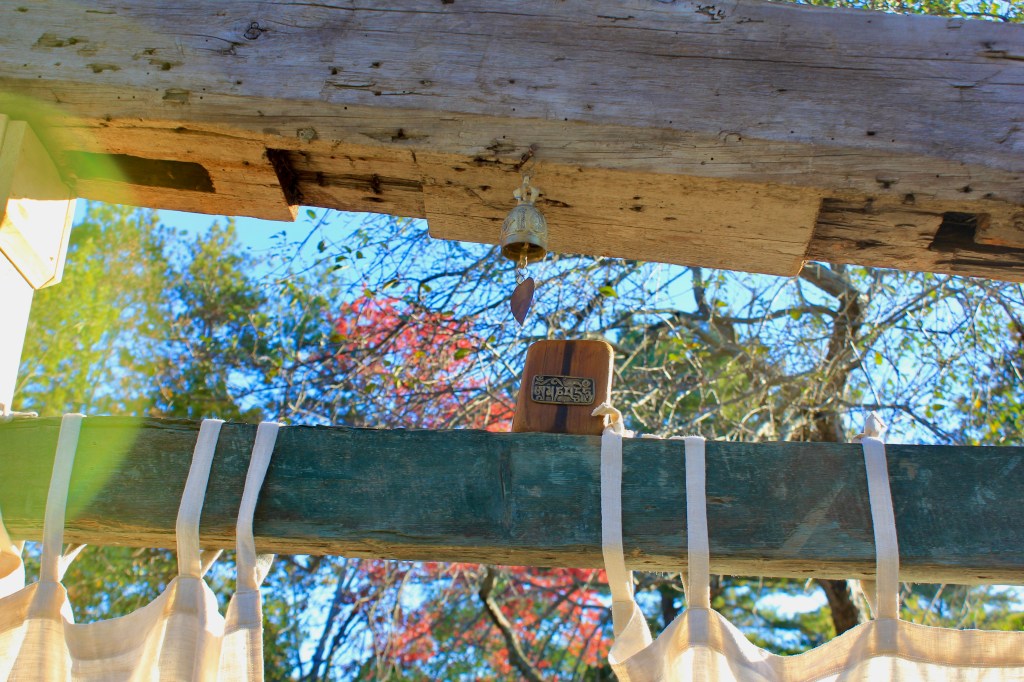
Wire fencing was installed on the posts to protect plantings while maintaining clear sightlines. Two custom arbors were built as part of the design — one framing the entrance and another positioned to support climbing vines and provide shade over a seating area. Both arbors were constructed from reclaimed antique barn wood, adding warmth, character, and a natural aesthetic that ties the garden into its surroundings.
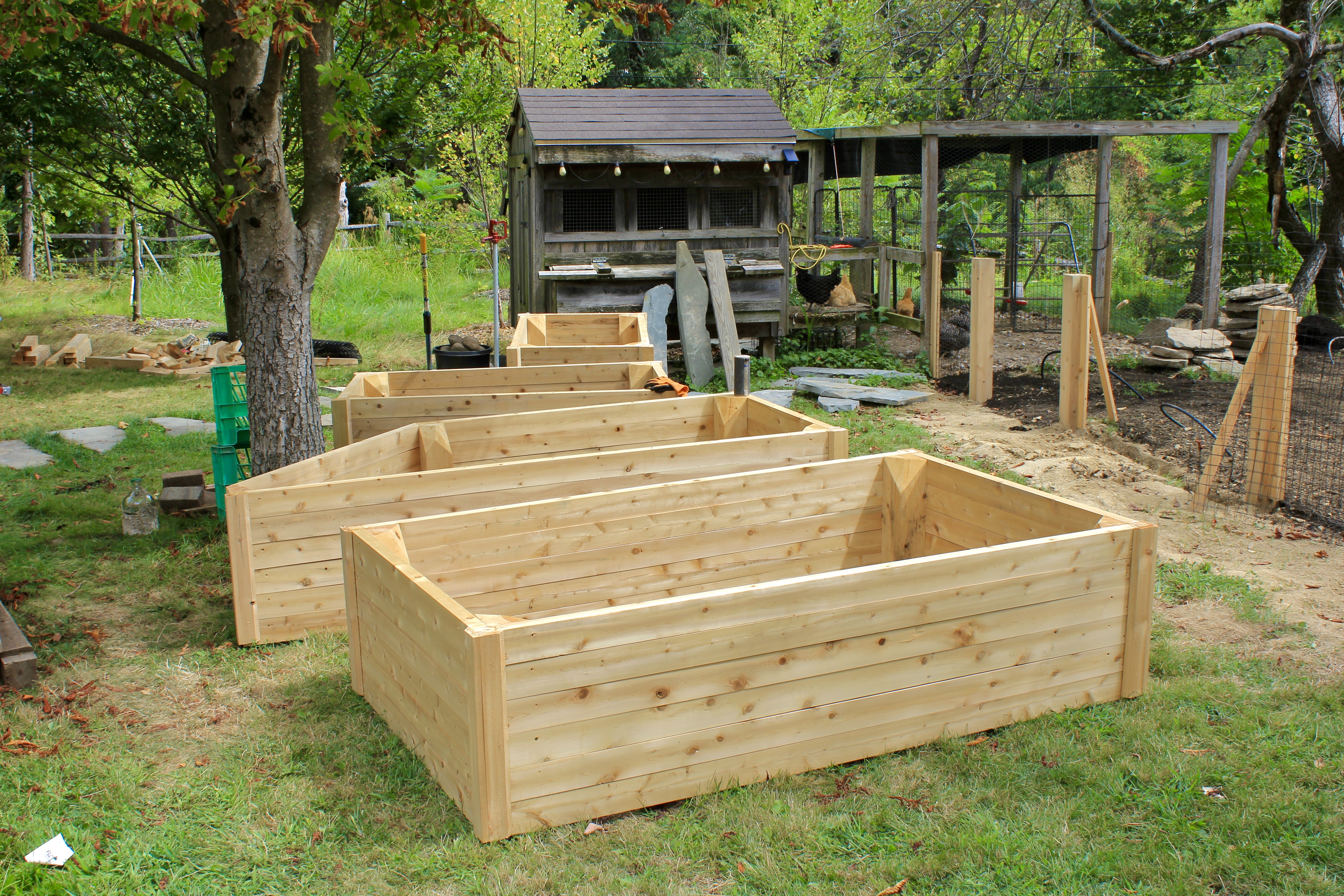
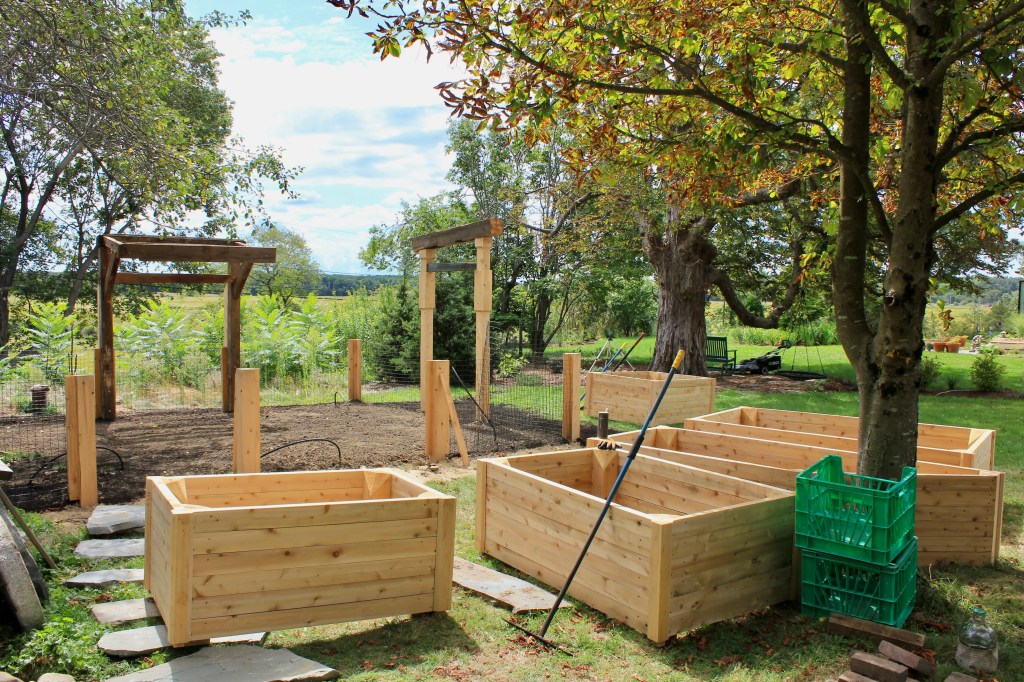
The raised garden boxes were custom built from white cedar, selected for its natural resistance to rot and longevity in outdoor environments. Using untreated wood ensured the beds remain safe for growing food while allowing the material to weather naturally over time. The clean lines and warm tone of the cedar complement the surrounding fencing and barn wood details, tying the raised beds seamlessly into the overall garden aesthetic.
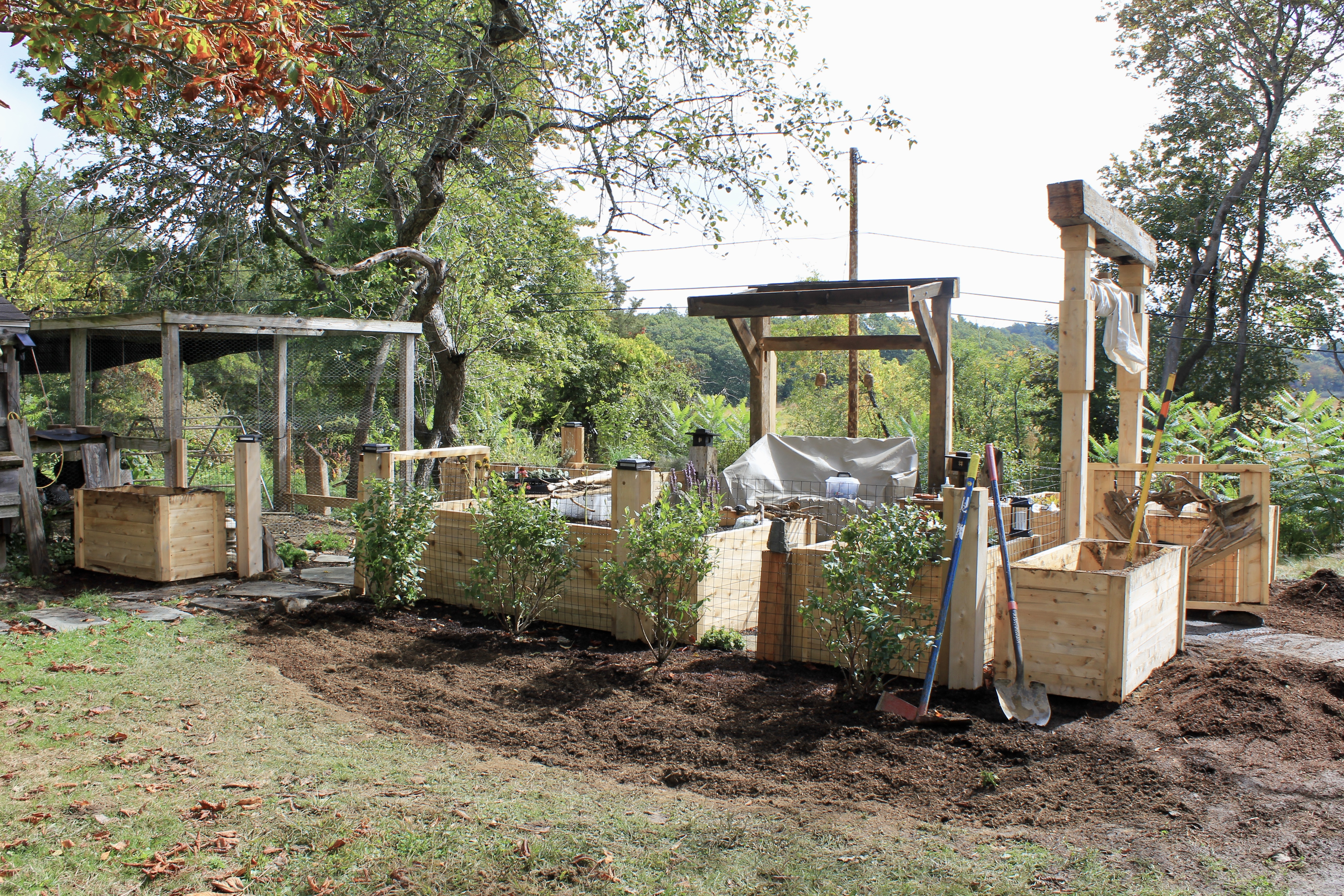
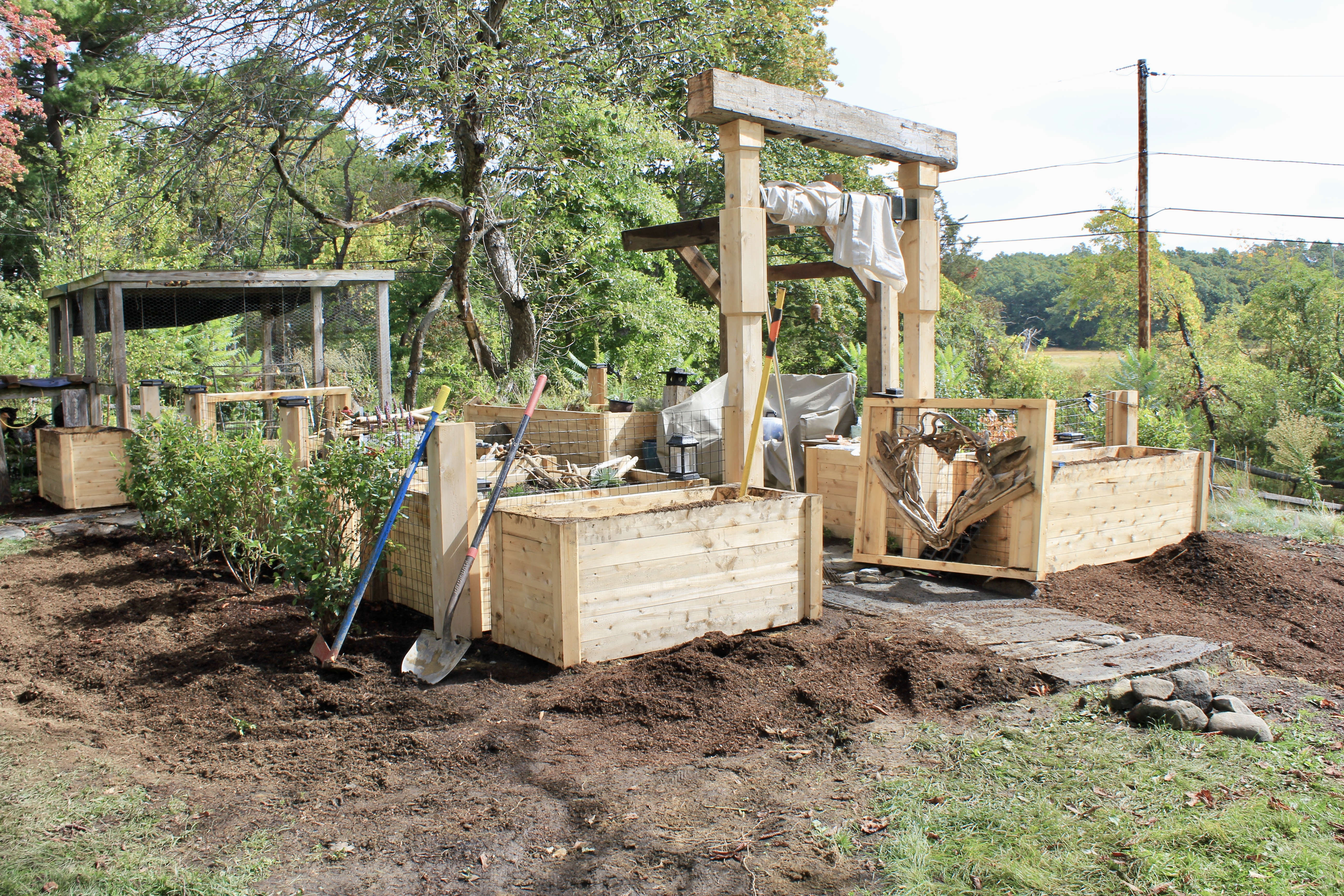
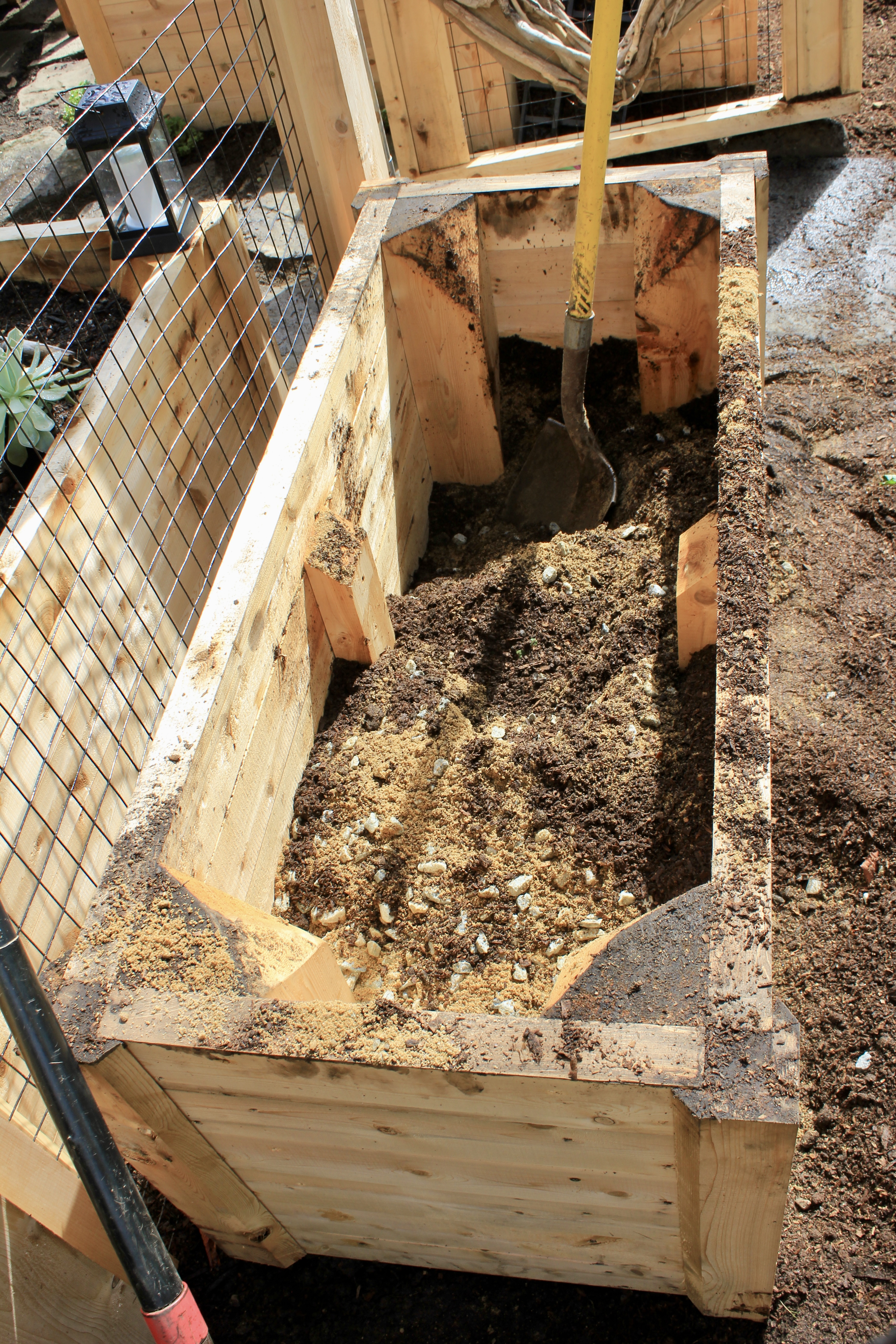
Once installed, the raised beds were filled with a carefully balanced blend of compost, loam, and sand to promote healthy drainage and long-term soil fertility. Select boxes were customized with a different soil mix to accommodate cactus plantings, ensuring proper conditions for each type of growth.
Along the outside perimeter of the fence, blueberry bushes were planted to create an edible border, complemented by yarrow, black-eyed Susan, and other beneficial plants chosen to support pollinators and reinforce a permaculture-focused garden system.
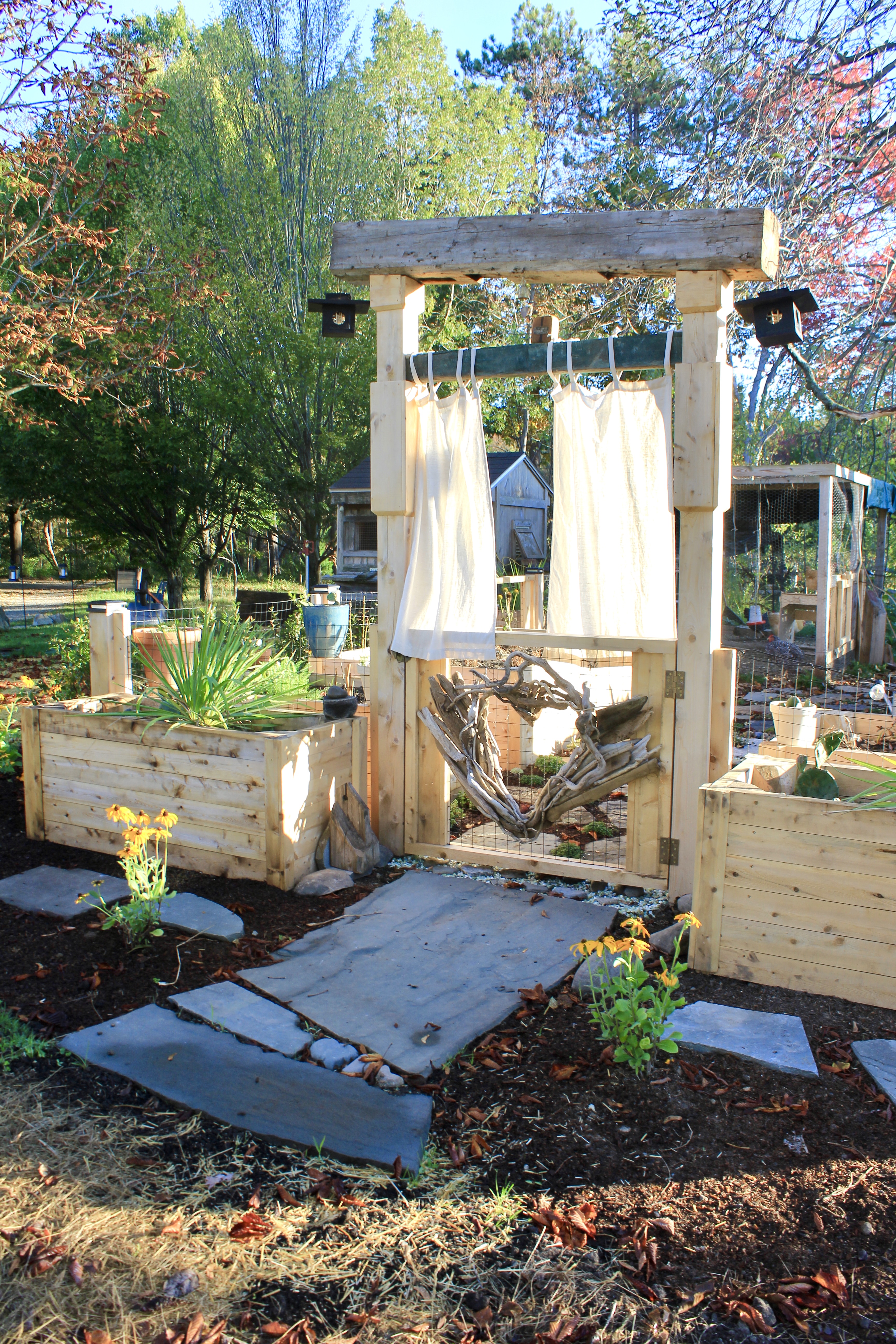
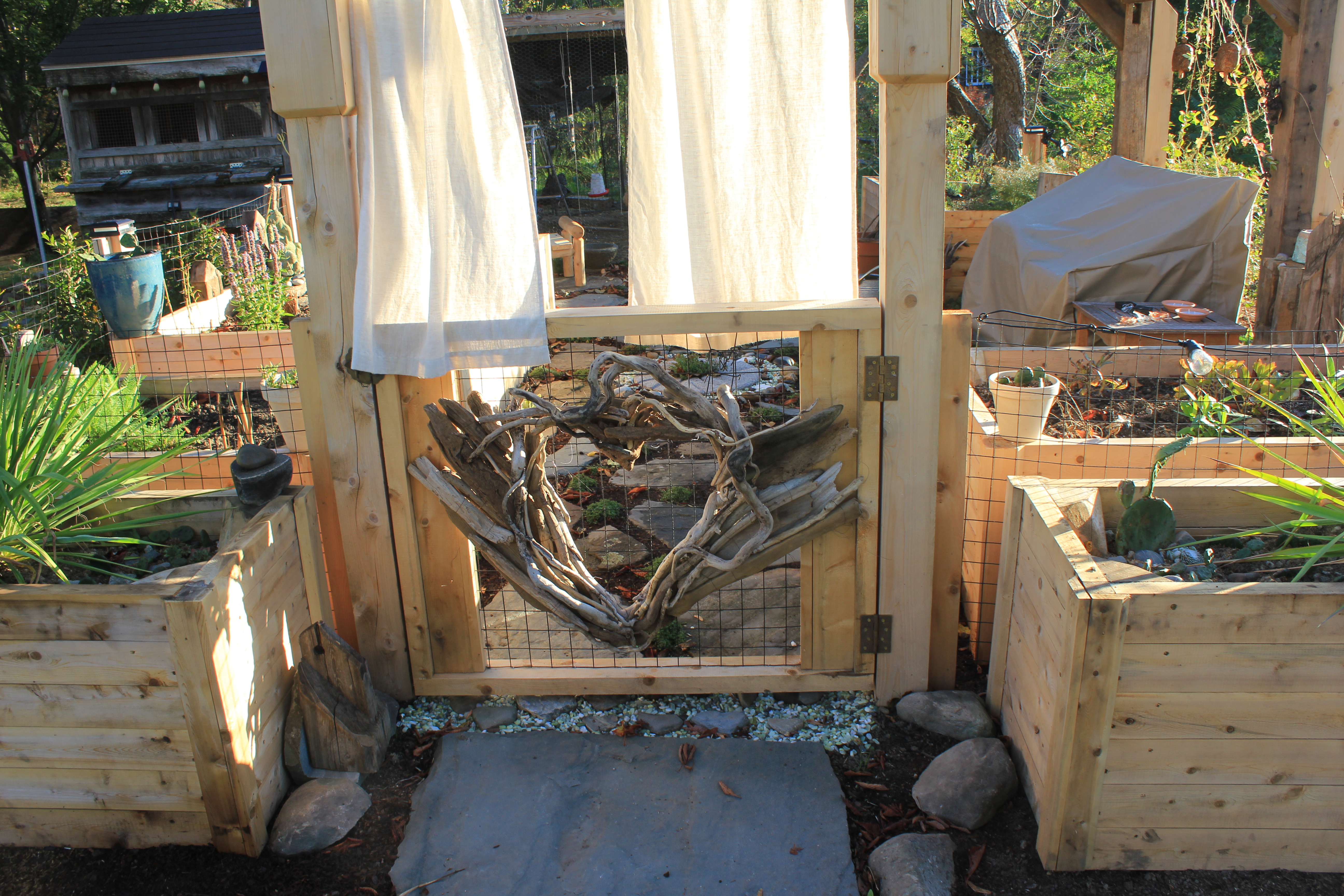
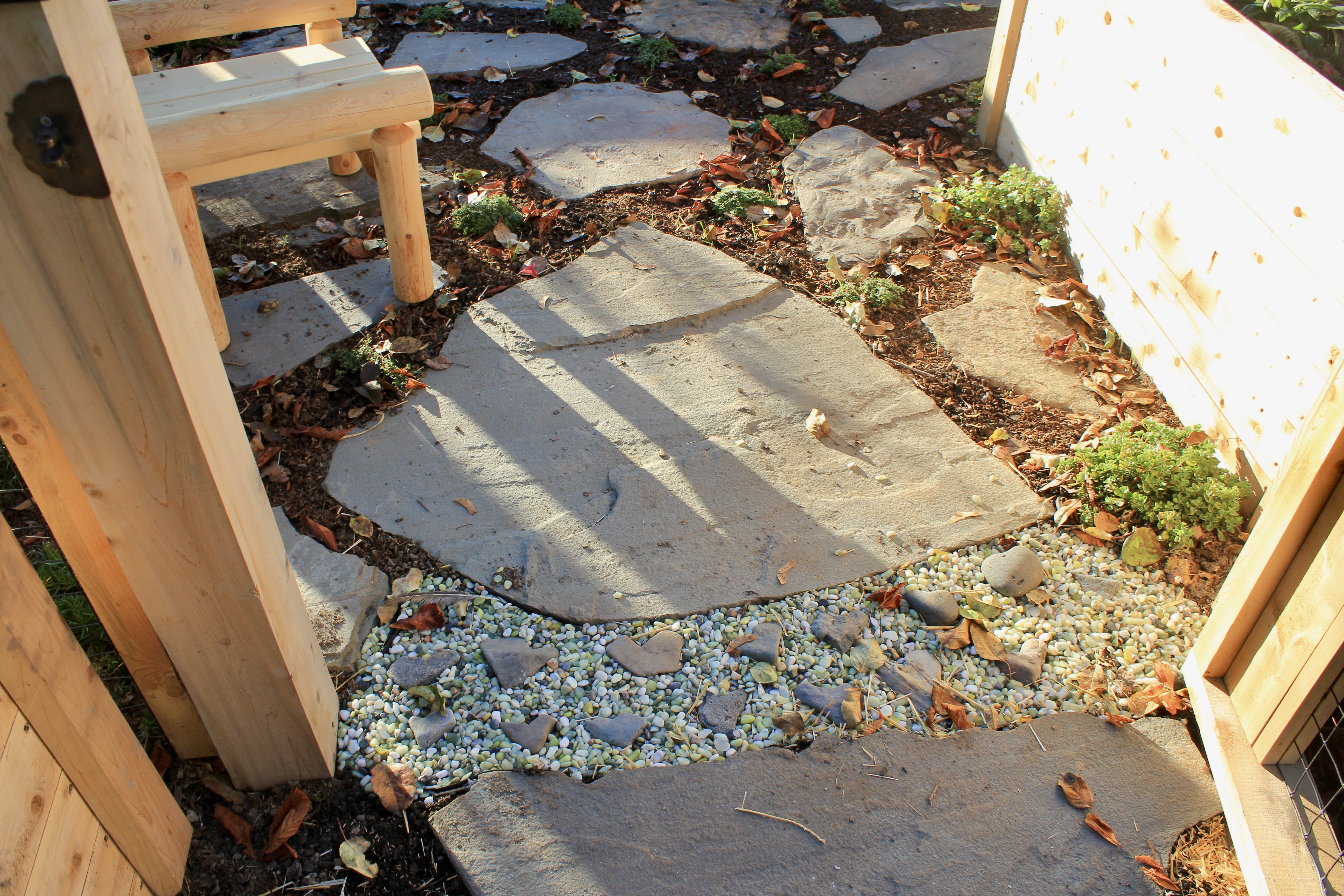
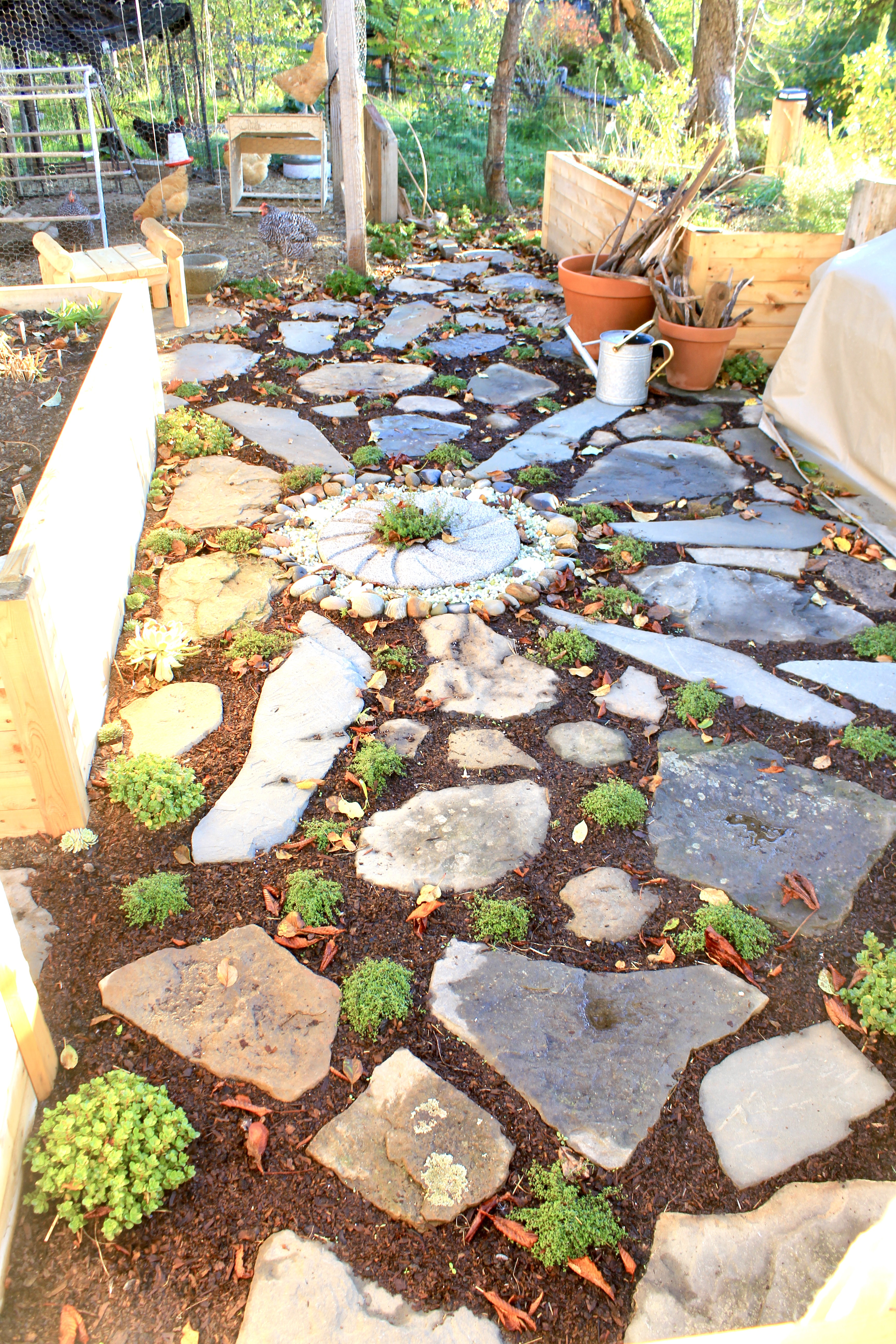
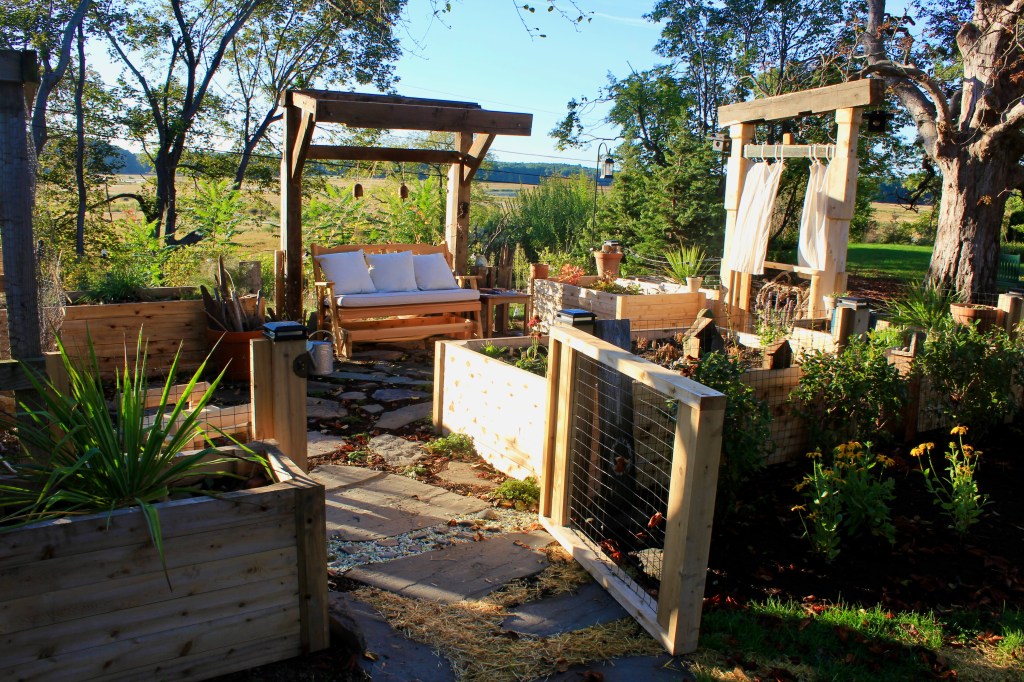
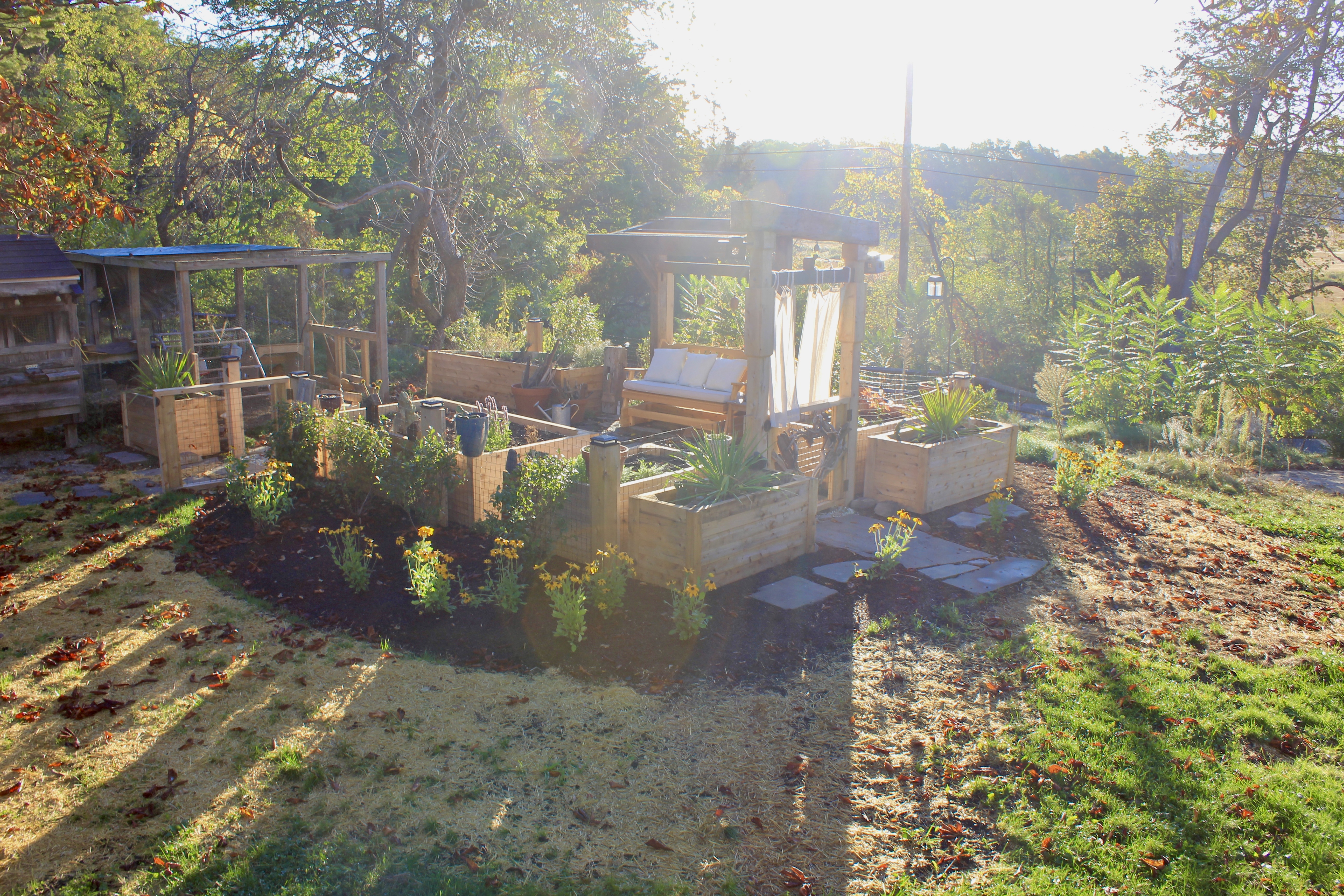
The final elements brought the entire garden together. Custom gates completed the enclosure, while a stepping stone path guided movement through the space to a small patio anchored by an antique granite mill wheel. Thyme was planted between the stones, selected to gradually fill in and soften the hardscape over time.
As it matures, the path will become a living surface — fragrant, functional, and fully integrated into the garden — marking the transition from construction to a space designed to grow and evolve with the seasons.
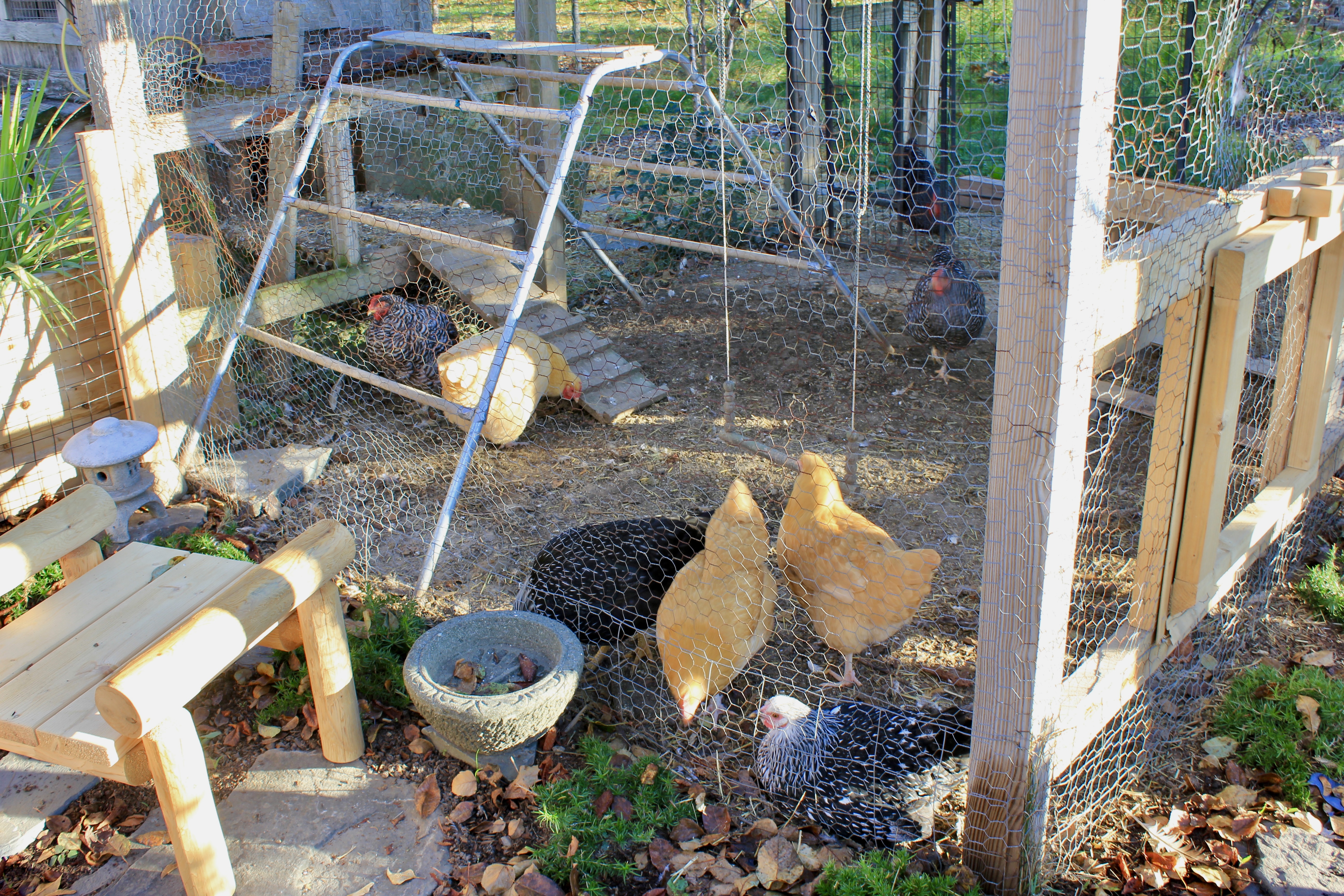
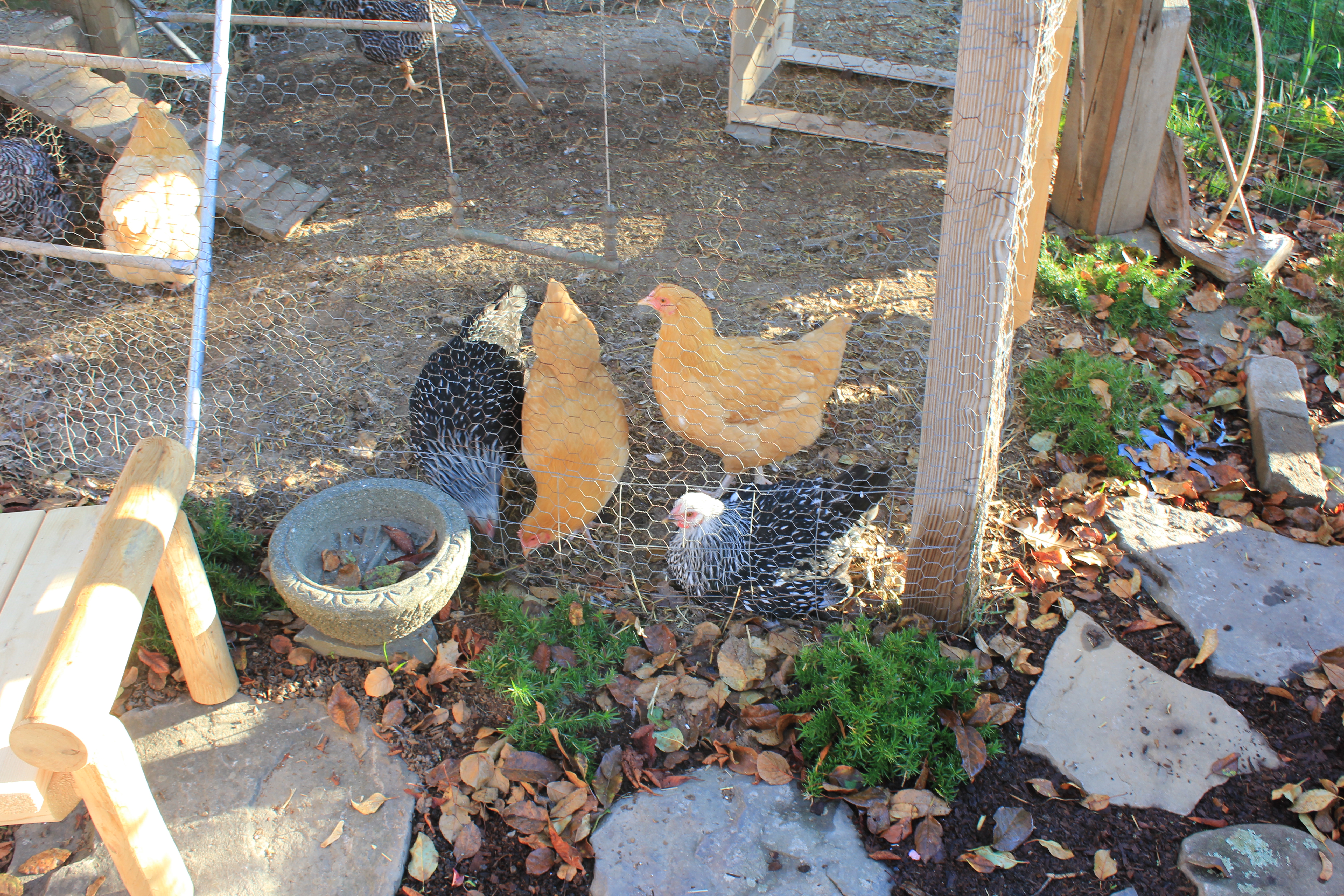
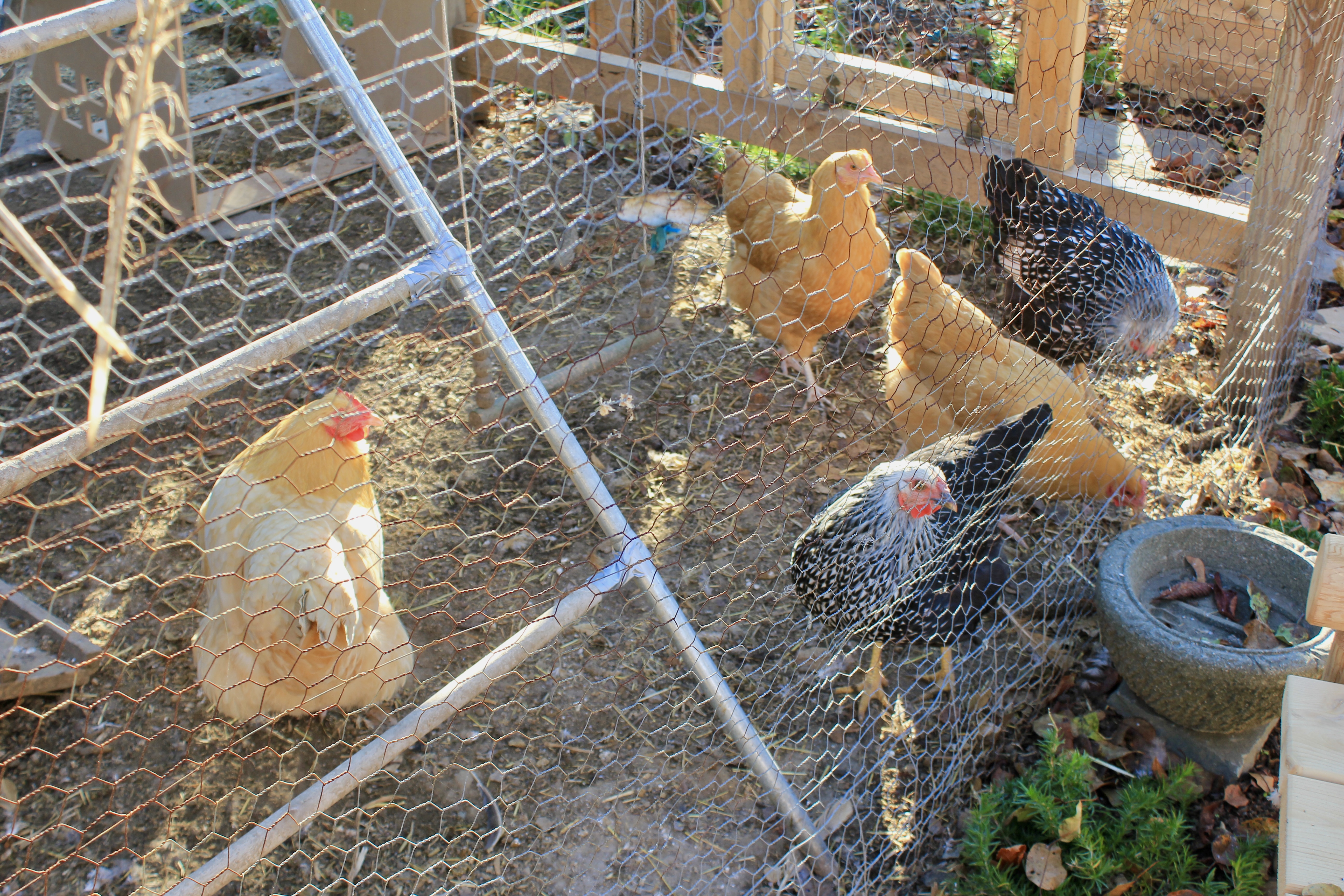
One of the most rewarding elements of the project was integrating the chicken coop directly into the vegetable garden. A small access flap allows the chickens to move into the garden at designated times, helping clean up scraps and naturally close the loop between growing and composting.
This final connection brought the entire space together — a garden designed not just for production, but as a living system where structure, planting, and daily use work in balance.



 JMJ Gardens